How to Short Bitcoin on Binance: Complete Guide
Learn how to short sell Bitcoin on Binance futures. Step-by-step guide including risk management and common mistakes.

What Does Shorting Bitcoin Mean?
Shorting means profiting when the price goes down. You sell first, buy back later at a lower price, and keep the difference.
How to Short BTC on Binance
Step 1: Open Futures Account
Navigate to Derivatives → USDT-M Futures. Open a futures account if you haven’t already.
Step 2: Transfer USDT
Move USDT from spot wallet to futures wallet.
Step 3: Select BTC/USDT Perpetual
Choose the BTCUSDT perpetual contract.
Step 4: Set Leverage
Start with 2-3x leverage. Click the leverage indicator to adjust.
Step 5: Select Order Type
- Market: Short immediately at current price
- Limit: Set your desired entry price
Step 6: Click “Sell/Short”
Enter your position size and click the Sell/Short button.
Step 7: Set Stop-Loss and Take-Profit
Critical: Set a stop-loss above your entry price to limit losses.
Example Short Trade
- Entry: Short BTC at $100,000
- Position: $10,000 at 5x leverage ($2,000 margin)
- Stop-loss: $103,000 (-3%)
- Take-profit: $95,000 (+5%)
If BTC drops to $95,000:
- Profit: $10,000 × 5% = $500 (25% return on margin)
If BTC rises to $103,000:
- Loss: $10,000 × 3% = $300 (15% loss on margin)
When to Short Bitcoin
Good conditions for shorting:
- Clear downtrend on higher timeframes
- Major resistance levels being tested
- Extremely high positive funding rates (overleveraged longs)
- Bearish divergences on RSI/MACD
Common Mistakes When Shorting
- Shorting in an uptrend — Don’t fight the trend
- No stop-loss — BTC can squeeze 10%+ in hours
- Too much leverage — A 5% move can liquidate you
- Ignoring funding rates — Negative funding means you pay to short
- Emotional shorting — Don’t short just because “it went up too much”
Verify Before You Sign Up — Don't Get Scammed
Many sites advertise fake referral discounts that don't actually apply. Before signing up through any referral link, always verify the referral code and discount rate shown on the Binance registration page. Here's proof of our verified referral:
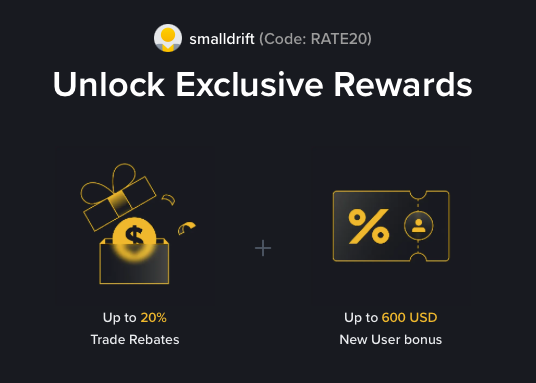
- Referral Code: RATE20
- Trade Rebate: Up to 20% on every trade (lifetime)
- New User Bonus: Up to 19,800 USD
If the registration page does not show these benefits, do not proceed. Only sign up when you can confirm the referral code and discount are applied.
Related Articles
Keep the Session Going With Stronger Hubs
Daily Crypto Market News
A fresher archive of daily market briefs, macro setups, and Bitcoin-led updates.
Bitcoin ETF Flows Guide
Understand what inflows and outflows actually mean, with recent examples and links.
Binance Fee Calculator
High-intent tool content that converts well and answers a clear search query.
Verified Binance Referral Guide
The core evergreen page for your highest-value signup intent.