Binance vs Coinbase: Which Exchange Is Better in 2026?
Detailed comparison of Binance and Coinbase covering fees, features, security, and supported coins.
Fee Comparison
This is where Binance wins decisively. Binance charges 0.10% maker/taker on spot (0.06% with referral + BNB). Coinbase charges 0.40% maker and 0.60% taker on its Advanced Trade platform — and even higher fees on its simple buy/sell interface (up to 1.49% + spread).
On futures, Binance charges 0.02% maker and 0.05% taker. Coinbase's futures offering is limited and charges 0.04% maker and 0.06% taker. Binance is roughly 50% cheaper on futures.
Withdrawal fees are comparable, as both charge network-based fees. However, Binance offers more network options (TRC-20, BEP-20, SOL) that are cheaper than Ethereum's ERC-20, while Coinbase's network options are more limited.
Bottom line: for a trader doing $10,000/month in spot volume, Binance with discounts costs approximately $12, while Coinbase costs $80-120. That's $70-100/month savings, or $840-1,200/year.
Supported Cryptocurrencies
Binance lists over 600 trading pairs covering 350+ cryptocurrencies. Coinbase supports approximately 250+ assets. Binance typically lists new projects faster and includes more small-cap altcoins, DeFi tokens, and emerging projects.
Binance's Launchpad and Launchpool regularly introduce new tokens before they're available elsewhere, giving Binance users early access to new projects. Coinbase tends to be more conservative with listings, prioritizing established projects.
For most traders, both exchanges cover the major assets (BTC, ETH, SOL, XRP, DOGE, etc.). The difference matters mainly for altcoin traders who want access to newer or more obscure tokens.
Trading Features
Binance offers a significantly broader feature set: spot trading, USDT-M and COIN-M futures (up to 125x leverage), margin trading, options, grid bots, DCA bots, copy trading, Binance Earn (staking, savings, liquidity farming), Launchpad/Launchpool, P2P marketplace, NFT marketplace, and Binance Pay.
Coinbase offers spot trading, limited futures (US regulated), Coinbase Earn (staking), a basic wallet, and Coinbase Commerce for merchants. Its feature set is much simpler and more limited.
For active traders, Binance's charting tools (powered by TradingView), advanced order types (OCO, trailing stop, TWAP), and trading bots are significant advantages. Coinbase's Advanced Trade interface is functional but lacks the depth of Binance's tools.
Coinbase does have an edge in Web3 with Coinbase Wallet and Base (its L2 network), which may matter for DeFi-focused users.
Security
Both exchanges take security seriously but approach it differently.
Binance maintains the SAFU (Secure Asset Fund for Users) — an emergency insurance fund holding $1 billion+ in reserves. Binance stores the majority of user assets in cold storage and employs AI-driven risk monitoring. In 2019, Binance experienced a $40 million hack but fully covered all losses through SAFU.
Coinbase is publicly traded on NASDAQ (COIN), providing regulatory transparency through SEC filings. Coinbase claims to store 98% of assets in cold storage and carries crime insurance. Being a US public company, Coinbase faces stricter regulatory oversight.
Both support 2FA (Google Authenticator, SMS), withdrawal address whitelisting, and device management. Binance additionally offers anti-phishing codes.
For US users specifically, Coinbase's regulatory standing may provide more legal protection. For international users, Binance's multi-jurisdictional licensing (20+ countries) and SAFU fund offer robust protection.
Ready to get started?
User Interface and Mobile App
Coinbase wins for absolute simplicity. Its interface is clean, minimal, and designed for people who just want to buy, hold, and sell. The mobile app is one of the highest-rated crypto apps on both iOS and Android.
Binance's interface is more complex but far more powerful. The default Pro view shows charts, order books, trade history, and multiple order types — which can overwhelm beginners. However, Binance Lite mode simplifies the mobile app to a Coinbase-like experience.
For desktop web trading, Binance offers a superior experience with full TradingView charting, customizable layouts, and real-time data. Coinbase's web interface is functional but basic in comparison.
Recommendation: If you're a complete beginner, start with Binance Lite mode. You get the lower fees with a simple interface, and can switch to Pro when ready.
Supported Countries and Regulations
Binance operates in 180+ countries and holds regulatory licenses in over 20 jurisdictions including France, Italy, Spain, Japan, Dubai, and others. However, Binance is not available in the United States (US users must use Binance.US, a separate entity with fewer features).
Coinbase is fully licensed in the US and operates in 100+ countries. It's publicly traded and SEC-regulated, making it the go-to choice for US users who want regulatory certainty.
For users outside the US, Binance is almost always the better choice due to lower fees and more features. For US residents, Coinbase is the simpler compliant option, though Binance.US offers lower fees if available in your state.
Customer Support
Binance offers 24/7 live chat support in multiple languages, an extensive help center, and active community support through social media. Response times are generally fast for live chat but can vary during high-traffic periods.
Coinbase offers email support and live chat for verified users. Historically, Coinbase has faced criticism for slow support response times, though this has improved in recent years. Coinbase also provides phone support for account lockout issues.
Both exchanges have comprehensive FAQ sections and educational resources. Binance Academy is a particularly strong free resource for learning about crypto.
Final Verdict
For most crypto traders worldwide, Binance is the clear winner. It offers fees that are 5-7x lower than Coinbase, significantly more features, deeper liquidity, and more trading pairs. The learning curve is manageable with Lite mode.
Coinbase is the better choice only in specific scenarios: (1) you're a US resident who wants the simplest possible experience, (2) you only plan to buy and hold major coins, or (3) you specifically value US regulatory oversight above all else.
If you're choosing Binance, make sure to sign up with referral code RATE20 for a permanent 20% fee discount. Combined with BNB fee payment, you'll have the lowest trading fees available anywhere.
Verify Before You Sign Up — Don't Get Scammed
Many sites advertise fake referral discounts that don't actually apply. Before signing up through any referral link, always verify the referral code and discount rate shown on the Binance registration page. Here's proof of our verified referral:
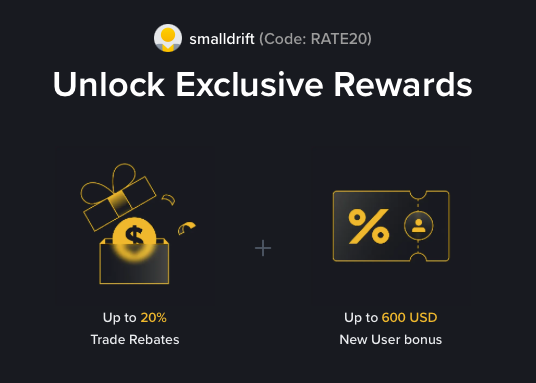
- Referral Code: RATE20
- Trade Rebate: Up to 20% on every trade (lifetime)
- New User Bonus: Up to 600 USD
If the registration page does not show these benefits, do not proceed. Only sign up when you can confirm the referral code and discount are applied.