Stop Sending USDT on Ethereum. It's Costing You 2,500x More Than It Should — Argentina Guide
USDC vs USDT fee comparison for trading, withdrawals, and transfers. Learn which stablecoin saves more on Binance with referral code RATE20 for 20% discount. Tailored for Argentina traders with ARS deposit methods.
For Argentina Traders
This guide is tailored for traders in Argentina. Sign up with referral code RATE20 for a 20% lifetime fee discount. Deposit ARS easily using local payment methods: Bank Transfer, Mercado Pago.
Argentina has very high crypto adoption due to peso devaluation and capital controls.
A single USDT transfer on Ethereum can cost you $25. The same transfer on Tron? Less than a cent. That’s a 2,500x difference — for moving the exact same dollar. Most traders never think about stablecoin fees until they’ve already overpaid. And with USDT and USDC together handling over $33 trillion in volume last year, even tiny fee differences compound into serious money.
Here’s the complete breakdown of what each stablecoin actually costs you — on exchanges, on-chain, and at withdrawal — so you can stop leaving money on the table.
The $184 Billion vs $78 Billion Question
Before we talk fees, let’s set the stage. As of March 2026:
| Metric | USDT (Tether) | USDC (Circle) |
|---|---|---|
| Market Cap | $184B | $78B |
| 24h Trading Volume | $73.6B | ~$18B |
| Market Share | 58.5% | ~25% |
| 2025 Annual Volume | $13.3T | $18.3T |
| On-chain Velocity | ~2.8x/month | ~16x/month |
That last row is the surprise. Despite having less than half the market cap, USDC flipped USDT in on-chain transfer volume for the second consecutive month in February 2026. USDC moves faster — it’s being used, not just held. That velocity difference hints at which stablecoin the institutions prefer for actual payments and settlements.
But for trading? USDT still dominates. And the fee implications are different depending on what you’re doing.
Exchange Trading Fees: USDT vs USDC
On centralized exchanges, the trading fee is usually the same regardless of which stablecoin you use as your quote currency. Binance charges 0.1% for spot trades whether you’re trading BTC/USDT or BTC/USDC.
But here’s where it gets interesting:
| Exchange | Spot Fee | USDC Advantage |
|---|---|---|
| Binance | 0.1% maker/taker | Zero-fee USDC spot pairs (promotional) |
| Coinbase | 0.4–0.6% advanced | USDC pairs often cheaper |
| Kraken | 0.25% maker / 0.40% taker | Similar for both |
| Bitget | 0.1% maker/taker | 20% off with BGB token |
The real differentiator on Binance is the zero-fee USDC promotion. Binance has repeatedly offered zero trading fees on all USDC spot pairs, including major pairs like BNB/USDC, ETH/USDC, and SOL/USDC. When these promotions are active, trading with USDC as your quote currency is literally free.
Even without promotions, you can stack discounts on Binance to minimize what you pay on either stablecoin.

Stack Your Discounts on Binance
Regardless of whether you trade USDT or USDC pairs, here’s how to minimize your Binance fees:
- 20% off — Use referral code RATE20 at signup
- 25% off — Pay fees with BNB token
- Maker discount — Use limit orders for lower futures fees
Effective fee: as low as ~0.06% per trade.
During USDC zero-fee promotions, your spot trading cost drops to literally 0% on USDC pairs — which means the smart play is to trade USDC pairs when the promotion is live, and fall back to USDT pairs with stacked discounts when it’s not.
Sign up on Binance with 20% fee discount →
Use referral code RATE20 for a permanent 20% off all trading fees.
On-Chain Transfer Fees: Where It Really Matters
This is where the stablecoin you choose — and more importantly, the network you choose — makes a massive difference. Sending stablecoins on-chain isn’t free. You pay gas fees to the blockchain, and those fees vary wildly.
| Network | USDT Fee | USDC Fee | Winner |
|---|---|---|---|
| Ethereum (ERC-20) | $5–$25+ | $3–$20+ | USDC (slightly) |
| Tron (TRC-20) | < $0.01 | Limited availability | USDT |
| Solana | ~$0.003 | ~$0.003 | Tie (USDC more popular) |
| BNB Chain (BEP-20) | ~$0.80 | ~$0.80 | Tie |
| Polygon | < $0.01 | < $0.01 | Tie (USDC more popular) |
| Arbitrum | $0.05–$0.10 | $0.05–$0.10 | Tie |
| TON | ~$0.01 | N/A | USDT only |
Key takeaways:
- Ethereum is expensive for both. If you’re sending stablecoins on L1 Ethereum, you’re paying $5–$25 regardless. USDC tends to be slightly cheaper due to its optimized smart contract, but neither is cheap.
- USDT owns Tron. The TRC-20 network is where USDT dominates, and transfers cost fractions of a cent. If you’re sending USDT between exchanges or wallets, Tron is the default choice for a reason.
- USDC owns Solana and Polygon. For USDC, these networks offer sub-cent transfers with wide adoption. Circle has heavily invested in Solana ecosystem support.
- Layer 2s level the playing field. On Arbitrum, Optimism, and Base, both stablecoins cost roughly the same — and it’s cheap.
Binance Withdrawal Fees by Network
When you withdraw stablecoins from Binance, the exchange charges a flat fee per network. This is separate from (and in addition to) the blockchain gas fee. Here’s what you’ll pay:
| Network | USDT Withdrawal Fee | USDC Withdrawal Fee |
|---|---|---|
| Ethereum | ~15–25 USDT | ~15–25 USDC |
| Tron | ~1 USDT | ~1 USDC |
| BNB Chain | ~0.80 USDT | ~0.80 USDC |
| Solana | ~1 USDT | ~1 USDC |
| Arbitrum | ~0.50 USDT | ~0.50 USDC |
| Polygon | ~0.50 USDT | ~0.50 USDC |
Note: Binance withdrawal fees are dynamic and adjust based on network conditions. Check the current rate before withdrawing.
The practical advice: never withdraw stablecoins on Ethereum unless you absolutely have to. Tron, BNB Chain, or Solana will save you 90%+ on withdrawal fees. For a $10,000 withdrawal, choosing Tron (1 USDT) over Ethereum (potentially 20 USDT) saves you $19 every single time.
The Liquidity Factor: Why Fees Aren’t Everything
Lower fees don’t help if you’re getting worse execution. And this is where USDT still has a structural advantage.
USDT has roughly 4x the 24-hour trading volume of USDC. That means:
- Tighter spreads on USDT pairs, especially for altcoins
- Less slippage on large orders
- More trading pairs available — many smaller altcoins only have USDT pairs
On Binance, virtually every coin has a USDT pair. USDC pairs are growing but still limited by comparison. If you’re trading micro-cap altcoins, you may not have a choice — it’s USDT or nothing.
For major pairs (BTC, ETH, SOL, BNB), both stablecoins offer deep liquidity and the spread difference is negligible. This is where the fee advantage of USDC promotions actually matters.
Regulatory Risk: The Hidden “Fee”
There’s a cost that doesn’t show up in any fee table: regulatory risk.
In early 2025, Binance delisted USDT for European customers to comply with the EU’s MiCA framework. USDC, being fully MiCA-compliant, remained available. If you’re in the EEA, USDC isn’t just cheaper — it’s your only option on regulated exchanges.
The U.S. is moving in a similar direction. The GENIUS Act has boosted demand for regulated stablecoins, and USDC’s market cap grew 73% in 2025 compared to USDT’s 36%. The trend is clear: regulation favors USDC.
Being forced to convert from USDT to USDC under time pressure — that’s a fee nobody talks about.
The Optimal Strategy: Use Both
The smartest traders don’t pick one stablecoin — they use both strategically:
- Trade USDC pairs when Binance zero-fee promotions are active
- Trade USDT pairs for altcoins with better liquidity
- Withdraw via Tron if sending USDT (cheapest route)
- Withdraw via Solana or Polygon if sending USDC (cheapest route)
- Hold USDC for long-term stablecoin savings (regulatory safety)
- Hold USDT for quick trading across multiple exchanges
On Binance, you can convert between USDT and USDC using Binance Convert with minimal spread — so switching between the two is nearly frictionless.
Start Trading With Maximum Fee Savings
Whether you choose USDT or USDC, the most impactful fee reduction comes from your exchange setup. On Binance:
Stack your discounts:
- 20% off — Use referral code RATE20 at signup
- 25% off — Pay fees with BNB token
- Maker discount — Use limit orders for even lower futures fees
Effective fee: as low as ~0.06% per trade.
Start trading on Binance with maximum discount →
For a deeper look at how Binance referral codes work and how to maximize your savings, check out our complete referral code guide with code RATE20.
What is the cheapest way to send USDT?
The cheapest way to send USDT is via the Tron (TRC-20) network, which costs less than $0.01 per transaction. Binance’s withdrawal fee for USDT on Tron is approximately 1 USDT — far cheaper than the 15–25 USDT fee on Ethereum.
What is the cheapest way to send USDC?
The cheapest way to send USDC is via Solana or Polygon, both costing less than $0.01 in network fees. On Binance, withdrawal fees for USDC on these networks are approximately 0.50–1.00 USDC.
Should I use USDT or USDC on Binance?
For most traders, the best approach is to use both. Trade USDC pairs during Binance’s zero-fee promotions for free spot trading. Use USDT pairs for altcoins with better liquidity. Use referral code RATE20 for a permanent 20% off all trading fees regardless of which stablecoin you choose.
Create your Binance account with 20% fee discount →
Referral code: RATE20 — permanent 20% off all trading fees.
This article is for informational purposes only and does not constitute financial advice. Always do your own research before making investment decisions.
How to Deposit ARS on Binance
- Go to Trade → P2P on Binance
- Select Buy USDT with ARS
- Choose a payment method:
- Bank Transfer
- Mercado Pago
- Select a verified merchant and complete the trade
- Use your USDT to trade any cryptocurrency on Binance
Verify Before You Sign Up — Don't Get Scammed
Many sites advertise fake referral discounts that don't actually apply. Before signing up through any referral link, always verify the referral code and discount rate shown on the Binance registration page. Here's proof of our verified referral:
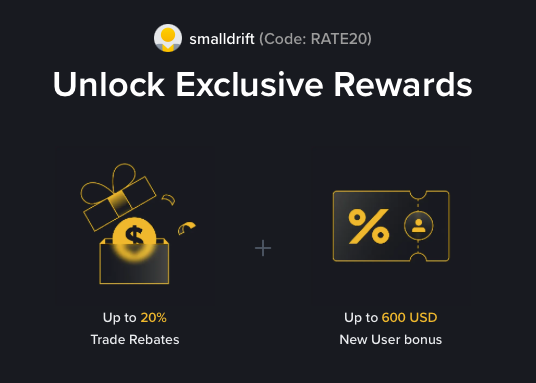
- Referral Code: RATE20
- Trade Rebate: Up to 20% on every trade (lifetime)
- New User Bonus: Up to 600 USD
If the registration page does not show these benefits, do not proceed. Only sign up when you can confirm the referral code and discount are applied.