Ethereum Just Made History Nobody Wanted. BTC at $63K Faces Monday's Test. — Turkey Guide
ETH posts first-ever 3 consecutive red quarters (-62%). BTC $63K faces Monday volume test. Aptos $70B flaw found. Binance referral code RATE20 for 20% discount. Tailored for Turkey traders with TRY deposit methods.
For Turkey Traders
This guide is tailored for traders in Turkey. Sign up with referral code RATE20 for a 20% lifetime fee discount. Deposit TRY easily using local payment methods: Bank Transfer, Papara, FAST.
Turkey has one of the highest crypto adoption rates globally, driven by lira inflation.
Ethereum just did something it has never done in its entire trading history: close three consecutive red quarters. Q4 2025 down 28%. Q1 2026 down 29%. Q2 2026 down 25%. Compounded, that’s a 62% wipeout since September — the longest sustained decline in ETH’s ten-year existence. And it happened while Bitcoin was busy rallying 8.7% on holiday air.
Today is the day that matters. US markets reopen. ETF flows resume. Institutional desks come back online. Bitcoin’s $63,000 holiday price tag gets its first real volume test — and Ethereum’s historic losing streak either breaks or extends into Q3. A $3,000 server almost broke $70 billion worth of crypto on Aptos. And Berachain kills its governance token tomorrow.
Welcome to the first real trading day of Q3.
The Monday Test: Can $63K Hold Real Volume?
Bitcoin rallied from $58,115 to $63,100 over the past ten days. It looks great on a chart. The problem: most of it happened while America was on vacation.
| Metric | Value |
|---|---|
| BTC Price | ~$63,000 |
| Rally from June low | +8.7% |
| Fear and Greed | ~18 (Extreme Fear) |
| US Markets | Reopening today |
| ETF Flows | Resume today |
| Last ETF data (July 2) | +$221.7M inflow |
The July 2 ETF inflow of $221.7 million ended a 10-day outflow streak that had drained $2.73 billion. But that was one day. The ETF plumbing was then shut off for three days while Bitcoin kept climbing on crypto-only volume — thinner order books, no CME futures settlement, no institutional flow.
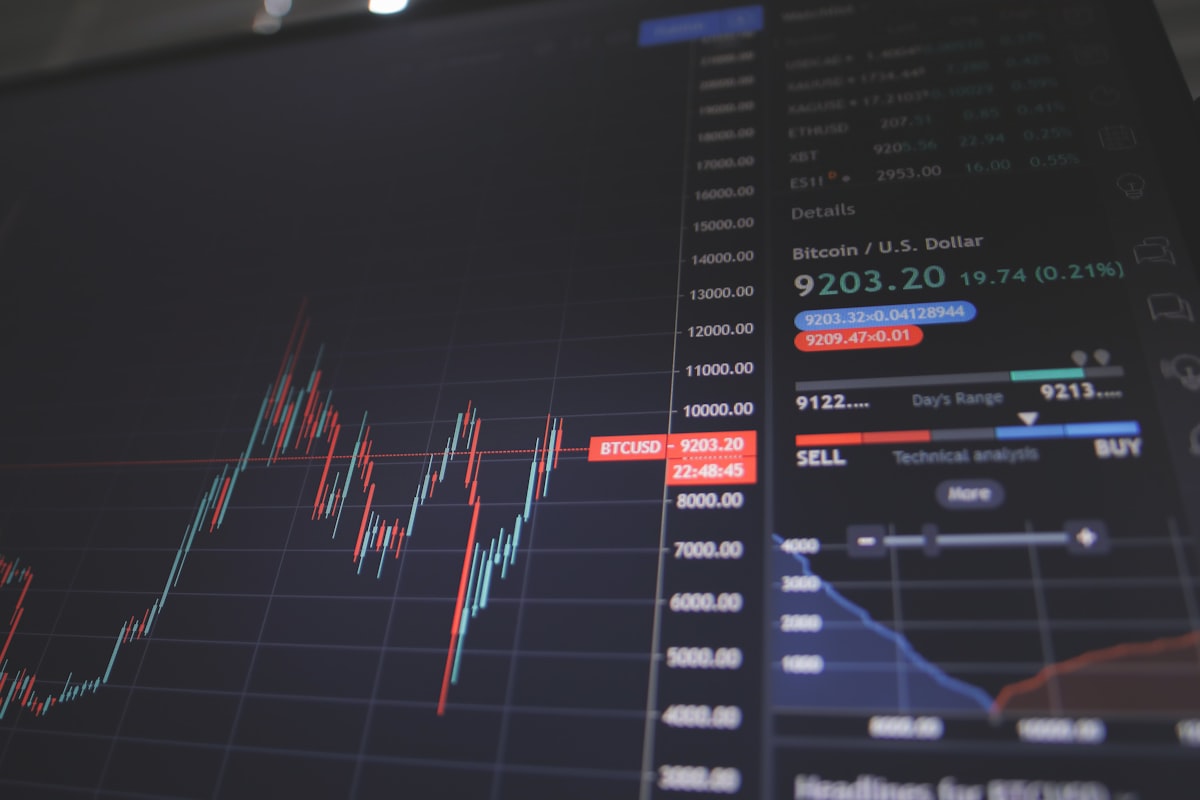
Here’s what to watch today:
- ETF flows: If Monday prints another positive day, the reversal thesis strengthens. If outflows resume, the holiday rally was a mirage. CryptoDaily’s analysis says flow-following strategies need 3–5 consecutive positive days before treating a bounce as a regime change.
- CME futures gap: Bitcoin was near $61,000 when CME futures closed Thursday. It’s now $63,000. That $2,000 gap typically gets filled — the question is whether it fills up (futures catch up to spot) or down (spot drops back to the close).
- Volume profile: Holiday moves on thin liquidity historically fade when real volume returns — unless backed by a genuine catalyst. Warsh’s dovish turn qualifies as a catalyst. Whether it’s enough to sustain $63K is today’s question.
The bull case for holding: July has historically been a recovery month for Bitcoin, with an average return of 7.25% and median return of 8.16% according to Coinglass data. If the seasonal pattern holds and ETF flows confirm, $65,600 becomes the base-case July target.
Ethereum’s Triple Red: A Record Nobody Wanted
CoinGlass data tells a story ETH holders would rather forget:
| Quarter | Return | Close |
|---|---|---|
| Q4 2025 | -28.28% | ~$2,500 |
| Q1 2026 | -29.26% | ~$1,770 |
| Q2 2026 | -24.77% | ~$1,330 |
| Cumulative | -62.3% | — |
That’s the first stretch of three consecutive red quarters in ETH’s history, per data going back to 2016. The longest prior streaks reached only two quarters, in 2018 and 2019.
The damage extends beyond price:
- Active addresses: Peaked at 795,000 in February 2026, now down to ~420,000 — a 46% decline
- Spot ETH ETFs: $274 million in outflows over five sessions with zero positive flow days
- Ethereum Foundation: Cut 54 employees and slashed its budget by 40%
- ETH/BTC ratio: Near multi-year lows

But there’s a contrarian case forming. Historically, Q3 has been Ethereum’s least directional quarter, averaging a 7.44% gain. The Glamsterdam upgrade — the first hard fork targeting base-layer throughput since The Merge — is scheduled for H2 2026. And Ethereum Institutional, backed by co-founder Joe Lubin and representing $250 trillion in combined AUM across 500+ relationships, launched on July 1.
If the 2022–2023 cycle is any guide, the full turnaround from bottom to confirmed recovery took about six months. That math points to October 2026 through January 2027. Not immediate — but not distant either.
ETH at $1,756 with three red quarters and extreme pessimism has the structure of a contrarian setup. Whether it has the catalyst depends on Glamsterdam’s delivery and whether institutional demand follows the new advocacy infrastructure.
Position for the Q3 Open
Markets are reopening, ETF flows are resuming, and the first real test of the holiday rally starts now. Whether you’re trading the reopen or building a longer-term position, having your fee structure optimized from day one matters.
Sign up on Binance with 20% fee discount →
Use referral code RATE20 for a permanent 20% off all trading fees.
A $3,000 Server Almost Broke $70 Billion in Crypto
This is the security story that deserves more attention than it’s getting.
Ethical hackers from security firm Hexens discovered a critical flaw in the Aptos blockchain that could have compromised up to $70 billion in digital assets — stablecoins, cross-chain bridges, and centralized exchange integrations included.
| Detail | Value |
|---|---|
| Vulnerability type | Stale-cache / type-confusion in Move VM |
| Simulated attack success rate | Over 90% |
| Attack cost | ~$3,000 (server to simulate 1/3 of validators) |
| Systemic risk estimate | ~$70B |
| Reported | February 25, 2026 |
| Patched | Within hours |
| Exploited in the wild | No |
The math is staggering. A $3,000 server, zero insider access, 90% success rate, $70 billion at risk. The only reason this didn’t become the largest hack in crypto history is that the people who found it chose responsible disclosure over a grey-market sale.
Aptos Labs stated the real-world exploitability was “extremely low,” but the researchers demonstrated otherwise under real network conditions. The flaw sat inside the Move virtual machine — the execution environment that processes every smart contract on Aptos. A successful exploit could have let an attacker hijack on-chain authority resources, including stablecoin minting and bridge controls.
The Aptos bug bounty ceiling is $1 million. The theoretical exposure was $70 billion. That’s a 70,000:1 ratio between what the vulnerability was worth and what finding it paid. The incentive structure for responsible disclosure remains deeply misaligned across the industry.
Berachain Kills BGT Tomorrow
Tomorrow — July 7 — Berachain undergoes its most significant upgrade since mainnet launch. PoL Next is a hard fork that rewrites the core incentive layer and deprecates the BGT governance token entirely.
What changes:
- BGT is deprecated. The Boost mechanism and emission allocation model that routed rewards through BGT voting cease operation
- BERA becomes the primary economic unit. sWBERA (staked wrapped BERA) becomes the new value-accrual layer
- New emissions model (ERAs): Protocols must demonstrate real on-chain revenue and utility to qualify for emissions — replacing the previous model of securing emissions via governance voting
- Residual BGT handling: Any BGT left on existing vaults auto-converts to WBERA on next claim. No action required from stakers
The simplification thesis is sound. BGT added friction — two tokens, boost mechanics, and a governance layer that confused traditional allocators more than it helped. Consolidating everything into sWBERA is a bet that simplicity drives more capital than complexity.
Whether PoL Next saves Berachain’s liquidity metrics is the open question. BERA is down significantly from its launch highs, and the DeFi ecosystem needs fresh capital, not just redesigned plumbing.
Stack Your Fee Discounts
With markets reopening and volume returning, every basis point matters:
- 20% off — Use referral code RATE20 at signup
- 25% off — Pay fees with BNB token
- Maker discount — Use limit orders for even lower futures fees
Effective fee: as low as ~0.06% per trade.
Start trading on Binance with maximum discount →
For the complete breakdown of stacking discounts, see our guide to the RATE20 code.
The Week Ahead
| Date | Event | Impact |
|---|---|---|
| July 6 (Mon) | US markets reopen | ETF flow test, CME gap fill |
| July 7 | Berachain PoL Next hard fork | BGT deprecated, sWBERA live |
| July 10 | CPI release (est.) | Inflation direction for FOMC |
| July 13 | Senate returns from recess | CLARITY Act floor vote window |
| July 29 | FOMC meeting | Decisive for H2 direction |
Key levels — BTC:
| Level | Significance |
|---|---|
| $58,115 | June low — absolute floor |
| $59,000 | Whale accumulation zone |
| $61,000 | CME futures close (gap fill target) |
| $63,000 | Current price / holiday high |
| $63,800 | Breakout confirmation |
| $65,600 | July base-case target |
| $67,000–$70,000 | Bullish July target zone |
Key levels — ETH:
| Level | Significance |
|---|---|
| $1,500 | Must-hold support |
| $1,560 | Current price |
| $1,753 | Recovery target |
| $2,000 | Psychological resistance |
The Bottom Line
The first real trading day of Q3 brings three tests that the holiday weekend couldn’t answer.
First: does Bitcoin’s $63K hold when real volume returns, or does the CME gap at $61K pull it back down? The ETF flow data today will be the clearest signal — a second consecutive positive day would be the strongest reversal indicator since May.
Second: does Ethereum’s historic triple-red streak break in Q3, or does the 46% decline in active addresses and ongoing ETF outflows extend the pain? The Glamsterdam upgrade and Ethereum Institutional launch provide structural hope, but hope isn’t a catalyst.
Third: does the Aptos near-miss change anything about how the industry approaches security? A $3,000 attack vector against $70 billion in assets — patched only because ethical researchers found it first — should be a wake-up call. It probably won’t be.
The smart money bought the June dip. The regulatory timeline slipped. And Ethereum just recorded the worst sustained decline in its history. Monday will tell us whether any of that matters — or whether it’s all just noise until the July 29 FOMC.
Create your Binance account with 20% fee discount →
Referral code: RATE20 — permanent 20% off all trading fees.
What is the best Binance referral code in July 2026?
The best Binance referral code is RATE20, which gives you a permanent 20% discount on all trading fees — both spot and futures. This is the maximum referral discount available.
How much can I save with Binance referral code RATE20?
| Monthly Volume | Standard Fee | With RATE20 (20% off) | Monthly Savings |
|---|---|---|---|
| $10,000 | $10.00 | $8.00 | $2.00 |
| $100,000 | $100.00 | $80.00 | $20.00 |
| $1,000,000 | $1,000.00 | $800.00 | $200.00 |
Stack with BNB payment (25% off) for an effective fee as low as 0.06%.
Will Ethereum recover in Q3 2026?
Ethereum faces its toughest recovery challenge ever after posting three consecutive red quarters — a first in its history. The 62% cumulative decline since September 2025 has pushed ETH to ~$1,560, with active addresses down 46% and spot ETF outflows persisting. However, Q3 has historically averaged a 7.44% gain for ETH. The Glamsterdam upgrade (H2 2026) targeting parallel transaction processing, the launch of Ethereum Institutional with $250T in AUM connections, and deeply oversold technicals create a potential inflection point. The 2022–2023 recovery took approximately six months from bottom to confirmation, suggesting October 2026 through January 2027 as the realistic recovery window if the pattern holds.
This article is for informational purposes only and does not constitute financial advice. Always do your own research before making investment decisions.
How to Deposit TRY on Binance
- Go to Trade → P2P on Binance
- Select Buy USDT with TRY
- Choose a payment method:
- Bank Transfer
- Papara
- FAST
- Select a verified merchant and complete the trade
- Use your USDT to trade any cryptocurrency on Binance
Verify Before You Sign Up — Don't Get Scammed
Many sites advertise fake referral discounts that don't actually apply. Before signing up through any referral link, always verify the referral code and discount rate shown on the Binance registration page. Here's proof of our verified referral:
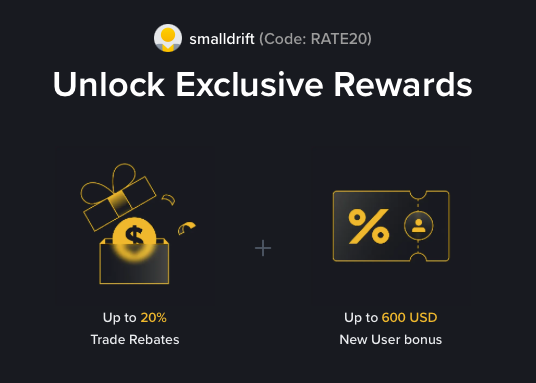
- Referral Code: RATE20
- Trade Rebate: Up to 20% on every trade (lifetime)
- New User Bonus: Up to 19,800 USD
If the registration page does not show these benefits, do not proceed. Only sign up when you can confirm the referral code and discount are applied.