$16.7B of Bitcoin Bought While ETFs Bleed $4B. Who's Early?
Bitcoin trades near $61.9K as whales buy $16.7B while ETFs bleed $4B. Track the key levels and use Binance referral code RATE20 for a 20% discount.
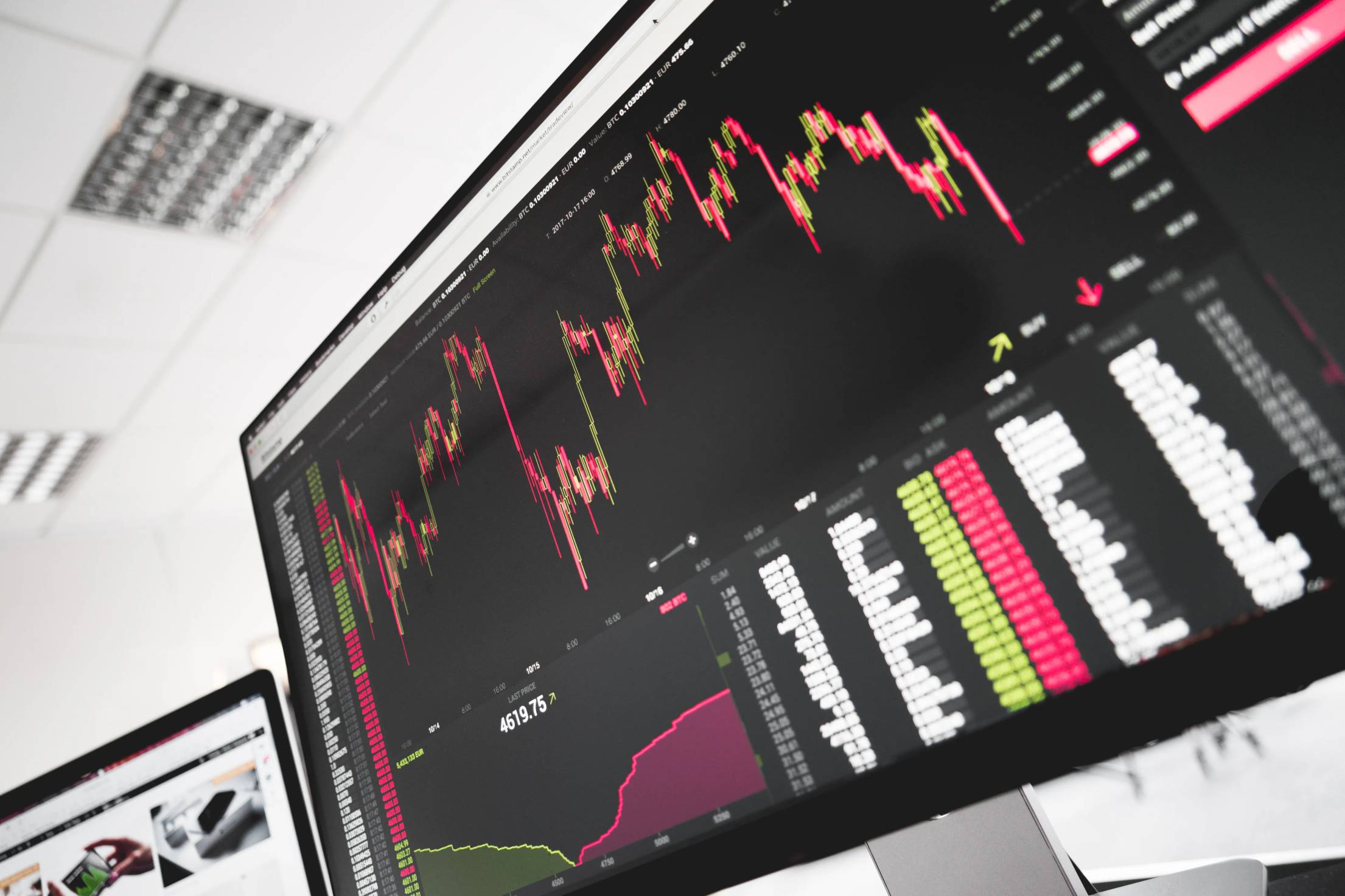
Bitcoin whales bought roughly $16.7 billion worth of BTC in two weeks while U.S. spot ETFs bled around $4 billion. Price is still hovering near $61,900, which means one of the market’s supposedly smartest buyer groups is accumulating into the same weakness that institutional funds are selling. The question is not whether someone is wrong; it is whether the divergence is early-cycle positioning or simply a very expensive disagreement.
That matters now because Bitcoin is sitting in the least comfortable part of its range: above the $60,000 floor, below the $66,000–$67,000 supply band, and close enough to both levels for leverage to turn a boring day into a violent one.
The flow war is the market
What is Bitcoin doing today?
Bitcoin is trading around $61,884, up about 0.68% on the latest market snapshot, but still trapped below the range where a real trend change would begin. Ether is near $1,732, XRP around $1.10, and Solana around $81.17. The market is green enough to tempt a headline and weak enough to punish anyone who treats it as confirmation.
| Asset | Approx. price | Latest move | Market read |
|---|---|---|---|
| Bitcoin (BTC) | $61,884 | +0.68% | Holding the $60K floor, not yet breaking range resistance |
| Ethereum (ETH) | $1,732 | +4.32% | Clear short-term relative strength |
| XRP | $1.10 | +1.17% | Bouncing, but still a beta trade |
| Solana (SOL) | $81.17 | -0.13% | Lagging majors during the rebound |
The numbers are from the live markets snapshot at CoinDesk. The important detail is not that ETH is outperforming BTC on one session. It is that capital is rotating selectively while Bitcoin remains stuck under overhead supply. That is a different market from a broad, risk-on altcoin wave.
The whale number comes from the same pattern: large holders have accumulated while the ETF complex has reduced exposure. According to CoinDesk’s latest market reporting, whales bought about $16.7 billion of Bitcoin over two weeks even as ETFs saw roughly $4 billion in outflows. That is a material mismatch, not a rounding error.
There are three plausible explanations:
- Whales are early. Large holders are buying weakness because they see forced ETF selling as temporary and expect a better liquidity regime later.
- ETFs are de-risking. Fund investors may be responding to macro stress, redemptions, or portfolio rebalancing rather than making a long-term call on Bitcoin.
- Both groups are right about different clocks. Whales can be right over six months while ETF sellers are right over the next six weeks.
The third explanation is the one most traders skip. Markets do not require one side to be stupid. Time horizon is enough to create a conflict.
Why $60,000 is the line nobody wants to test
Bitcoin’s chart is not offering a clean bullish signal. It is offering a negotiation.
The first negotiation is happening between $60,000 and $61,000. This region has repeatedly acted as a psychological and liquidity floor through the summer. The second is around $63,500–$63,800, where short-term buyers have been defending dips. The third is overhead: $66,000–$67,000, where previous rallies met supply and where order-book liquidity has clustered.
| Level | Role | What a daily close would say |
|---|---|---|
| $60,000–$61,000 | Major support | A close below reopens the June-style downside conversation |
| $63,500–$63,800 | Near-term pivot | Holding it keeps the range constructive |
| $66,000–$67,000 | First resistance | Reclaiming it would force shorts to reassess |
| $68,000 | Breakout trigger | A sustained move above would validate higher targets |
| $75,000–$80,000 | Upside extension | A target zone, not a base case today |
Earlier technical analysis cited by GNcrypto also identified $61,000 as the level that must hold before a larger move toward $68,000 and eventually $75,000–$80,000 can be considered. That is a conditional forecast, not a promise. Technical analysis is a map of what price must do next; it is not a coupon for the destination.
The practical read is simple:
- Above $63,800, sellers are losing immediate control but have not lost the range.
- Above $67,000, the market has evidence that demand can absorb the old supply.
- Below $60,000, whale accumulation becomes less comforting because unrealized losses can turn patient buyers into forced sellers.
ETF outflows do not automatically mean a bear market
The ETF headline is emotionally efficient and analytically incomplete. Outflows are selling pressure, but they are not a perfect proxy for all institutional demand. A fund can lose assets because investors are taking profits, because a model is rebalancing, or because its holder base is reducing risk ahead of a macro event. None of those tells us what a long-term allocator thinks Bitcoin is worth.
The historical context is sobering. The Block reported that U.S. spot Bitcoin ETFs had recorded approximately $5.34 billion of net outflows since the start of 2026, while Ether ETFs had lost about $1.35 billion over the same period. The rebound in July recovered only a fraction of the preceding outflows. ETF trading volume was also subdued, which suggests the market is not seeing a full-throated institutional bid yet.
That makes whale behavior more interesting, but not automatically more correct. On-chain buyers can accumulate because coins are moving into cold storage, because a treasury is building a strategic reserve, or because a large entity is averaging into a position. None of those removes the possibility of another liquidation wave.
The signal worth watching is the combination, not either metric alone:
| Signal | Bullish interpretation | Bearish interpretation |
|---|---|---|
| Whales accumulate | Supply is leaving liquid venues | One buyer is catching a falling knife |
| ETFs outflow | Temporary redemptions create a seller vacuum later | Institutional demand is genuinely fading |
| Exchange balances fall | Less immediately available supply | Coins are moving to venues through untracked routes |
| ETH outperforms BTC | Risk appetite is broadening | BTC leadership is weakening too early |
If price holds $60,000 while ETFs continue to bleed, the accumulation thesis gets stronger. If price breaks $60,000 despite whales buying, the market is telling you that the marginal seller still matters more than the patient buyer.
Altcoins are sending a mixed message
Ethereum’s roughly 4.3% move is the cleanest sign of relative strength in today’s snapshot. XRP is also firmer, while Solana is flat to slightly lower. That spread matters because a healthy crypto rebound usually broadens after Bitcoin stabilizes. It does not begin with every large-cap token moving in lockstep.
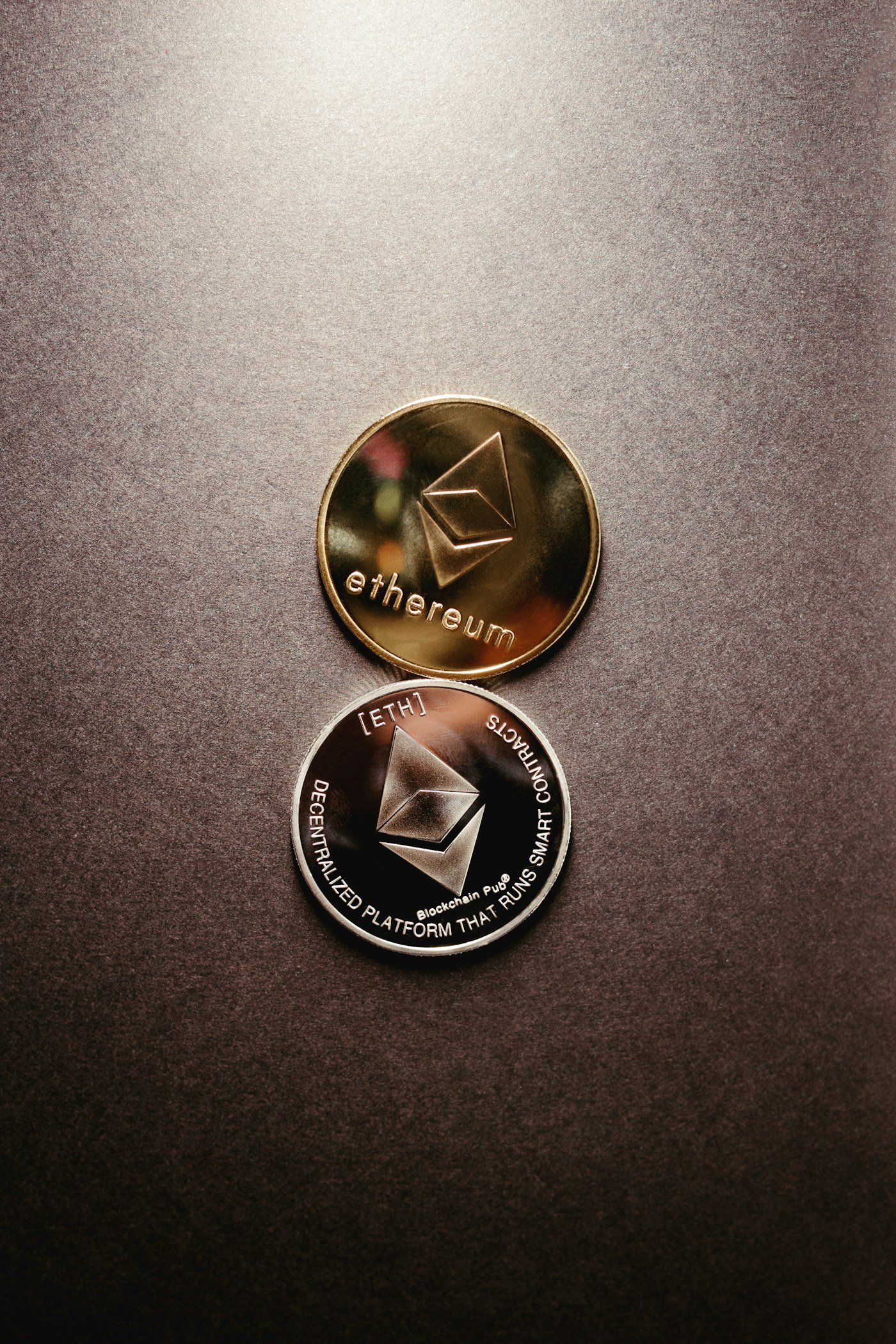
ETH’s outperformance can mean two things. It can be a catch-up trade after a period of underperformance, or it can be the first leg of a broader rotation into assets with more beta. The confirmation test is follow-through: ETH needs to hold its gains while BTC reclaims resistance, not merely print one bright daily candle while Bitcoin remains range-bound.
For traders, the hierarchy is useful:
- BTC above $67,000: altcoin strength has a better chance of being durable.
- BTC between $61,000 and $67,000: treat altcoin rallies as tactical and size accordingly.
- BTC below $60,000: assume correlations rise and liquidity disappears before searching for the next outperformer.
Trade this setup with fee discipline
Range markets punish overtrading. If you are taking several small entries around support and resistance, fees become a quiet second position. The Binance referral guide with code RATE20 explains the setup and the permanent discount.
Sign up on Binance with 20% fee discount →
Use referral code RATE20 for a permanent 20% off all trading fees.
The discount does not make a losing trade profitable. It simply reduces the friction on trades you would already take, which is particularly relevant when a range creates more execution attempts than a clean trend.
What would confirm the whale thesis?
The whale thesis is confirmed only if Bitcoin holds support and converts resistance into support. The clean sequence would be a defense of $60,000–$61,000, a reclaim of $63,800, and then a daily close above $67,000 with expanding spot volume.
The failure sequence is equally clear: BTC loses $60,000, ETF outflows accelerate, and ETH’s relative strength disappears. In that case, the $16.7 billion accumulation figure becomes evidence of demand meeting a larger supply event—not proof that a bottom is in.
That is why the best trade today may be patience. A market trapped between an aggressive whale bid and a persistent institutional offer does not owe anyone a breakout. It owes everyone volatility eventually.
Stack your Binance fee discounts
If you are trading this range, stack the available reductions:
- 20% off — Use referral code RATE20 at signup.
- 25% off — Pay fees with BNB token.
- Maker discount — Use limit orders for even lower futures fees.
| Trading behavior | Why it matters in this range |
|---|---|
| Limit entries near support | Reduces slippage and can qualify for maker pricing |
| Smaller position sizes | Keeps one failed level from dominating the account |
| Predefined invalidation | Makes $60K a decision point rather than an emotion test |
| Fee discount + BNB payment | Lowers the cost of repeated, planned execution |
Effective fee: as low as ~0.06% per trade.
Start trading on Binance with maximum discount →
Bitcoin whale accumulation FAQ
Are Bitcoin whales buying or selling today?
Recent reporting indicates that large holders bought approximately $16.7 billion of Bitcoin over two weeks. That accumulation occurred while U.S. spot ETFs experienced roughly $4 billion in outflows, creating a clear on-chain-versus-fund-flow divergence.
What are the key Bitcoin support and resistance levels?
The main support zone is $60,000–$61,000, while first major resistance is $66,000–$67,000. A close above $67,000 would improve the breakout case; a close below $60,000 would weaken it materially.
What is the best Binance referral code?
The best Binance referral code is RATE20. It provides a permanent 20% discount on eligible trading fees when used during signup; users should review the current terms and availability in their jurisdiction.
How much can I save with Binance referral code RATE20?
RATE20 reduces eligible trading fees by 20%, with larger savings as trading volume increases. The simple math is shown below before any additional BNB or maker-order reductions.
| Monthly trading volume | Fee savings at 20% discount |
|---|---|
| $10,000 | $2 on a 0.10% fee schedule |
| $50,000 | $10 on a 0.10% fee schedule |
| $100,000 | $20 on a 0.10% fee schedule |
Create your Binance account with 20% fee discount →
Referral code: RATE20 — permanent 20% off all trading fees.
This article is for informational purposes only and does not constitute financial advice. Always do your own research before making investment decisions.
Get 20% Off Binance Trading Fees with RATE20
New to Binance? Open the official signup page with RATE20 already applied for a 20% trading-fee discount. You do not need to copy or type the code. Review the referral details before completing registration.
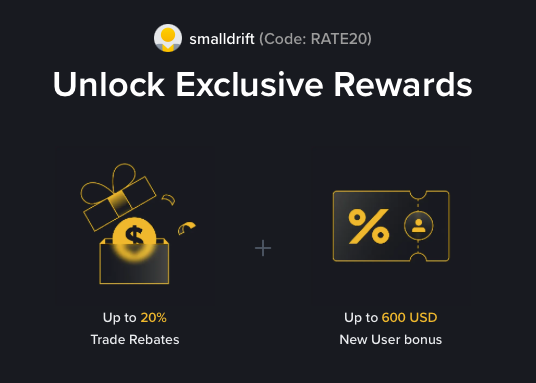
- Referral code: RATE20, pre-applied by this link
- Fee discount: 20%, shown on the Binance signup screen
- Additional rewards: Check Binance for current promotions and regional availability
Be wary of unofficial referral offers promising benefits they cannot show. The Binance signup screen lets you check the code and fee discount directly.
Compare Binance fees and available discounts →
SmallDrift may earn a commission when you sign up through this link. Trading involves risk, including loss of capital.
Related Articles

Explore Related Guides
Daily Crypto Market News
Follow Bitcoin price moves, major altcoins, and the events shaping the market.
Bitcoin ETF Flows Guide
Understand ETF inflows and outflows, and how to read them alongside price action.
Binance Fee Calculator
Learn how to estimate trading costs with referral and BNB discounts.
Verified Binance Referral Guide
See how RATE20 is applied and what to check on the Binance signup screen.