Bitcoin Hit $80K—Can $2.6B in ETF Flows Hold It?
Bitcoin reclaimed $80K as last week’s BTC and Ether ETF inflows reached $2.6B. Here is the confirmation test traders should watch.

Bitcoin traded near $80,666 after climbing 4.1% in 24 hours on Binance. Last week’s spot Bitcoin and Ether ETF inflows totaled $2.6 billion, but a surge that clears $80,000 has a nasty habit of making everyone forget that the first retest—not the first breakout—does the real work. If you are deciding whether this is durable demand or simply a very expensive short squeeze, the next few sessions matter more than today’s green number.
The evidence for a genuine bid is unusually solid. U.S. spot Bitcoin ETFs took in $1.9 billion during August 17–21, while Ether ETFs added $697.2 million; combined trading volume more than tripled to $29 billion, according to The Block’s weekly flow report. The question is whether that allocation persists now that price has reclaimed a level that tends to turn disciplined buyers into amateur meteorologists.
The $80K Move Has a Real Buyer Behind It
Is Bitcoin’s move above $80,000 backed by spot demand?
Yes—the latest ETF data shows actual capital entering Bitcoin and Ether funds, not just derivatives traders chasing a candle. It does not, however, prove that the bid will remain once the breakout is tested.
Bitcoin’s latest Binance 24-hour range was $76,838 to $81,273, with $2.63 billion in BTC/USDT quote volume. The cross-check from CoinGecko’s live market page placed BTC around $80,515 at the time of writing. Crypto prices move quickly, so those are snapshots rather than promises; the point is that $80,000 has become an active decision zone.
| Market and flow marker | Latest reading | What it says |
|---|---|---|
| BTC/USDT price on Binance | $80,666 | BTC was back above the $80K round-number pivot |
| BTC/USDT 24-hour change | +4.1% | Strong directional move, but also a higher bar for follow-through |
| BTC/USDT 24-hour range | $76,838–$81,273 | Shows the intraday area traders are currently defending |
| U.S. spot Bitcoin ETF weekly net inflow | $1.9B | Direct evidence of institutional BTC demand |
| U.S. spot Ether ETF weekly net inflow | $697.2M | The bid broadened beyond Bitcoin |
| Combined BTC + ETH ETF volume | $29B | Participation expanded sharply during the rally |
The broader backdrop helps explain why this bid arrived together. Bitcoin had fallen below $60,000 at the end of June before rebounding; the Associated Press reported that the latest recovery coincided with Treasury buyback plans and renewed U.S. crypto-legislation attention. Macro relief, policy optimism, and fund flows can all pull in the same direction. Markets rarely send engraved invitations explaining which guest will leave first.

The Catch: Flows and Forced Buying Are Not the Same Thing
The bullish case is not that Bitcoin rose. It is that ETF creations represent a buyer that does not need to roll a perpetual future every eight hours. A fund-flow report is not perfect information—flows can reverse, and price appreciation also changes assets under management—but it is better evidence than a single liquidation headline.
Last week included both real fund demand and a rapid move through resistance. That distinction matters because forced buying has an expiry date. When shorts close, their purchase is complete. When an allocator creates ETF shares, the position can remain in place. The market’s next task is to reveal which force is still present after the excitement wears off.
Three signals separate a healthy retest from a round trip:
- Daily ETF persistence: One more positive flow sequence is more useful than a retrospective record week.
- Spot-led volume: A consolidation with steady spot activity is healthier than a vertical move driven solely by futures open interest.
- A contained pullback: A hold near the breakout area while funding cools would show sellers are being absorbed rather than ignored.
For direct, daily flow context, Farside’s Bitcoin ETF tracker and its Ether tracker are the pages worth watching. They update the evidence; they do not provide a crystal ball, which is a feature.
Trade This Setup
The useful response to a fast breakout is to define risk before adding exposure. If your thesis requires Bitcoin never revisiting $80,000, it is not a thesis; it is a wish wearing a spreadsheet.
Check the current Binance signup offer with code RATE20 →
Use referral code RATE20 during eligible new-account signup. Confirm the code and current offer shown by Binance before completing registration.
Which Bitcoin Levels Matter After $80K?
What has to hold for the breakout to remain credible?
Bitcoin does not need to rise in a straight line; it needs to show that buyers can defend the $80,000 area after the initial impulse. The levels below are trading zones inferred from the latest range and recent reported price structure, not guaranteed support or resistance.
| BTC zone | Role now | Constructive evidence | Warning sign |
|---|---|---|---|
| $81,000–$81,300 | Latest intraday high area | A close above it with persistent ETF inflows | Repeated rejection while leverage grows |
| $80,000 | Immediate psychological pivot | A retest that finds spot buyers | A quick loss that becomes resistance |
| $76,800–$77,200 | Latest session low / prior reported area | A contained reset with flows still positive | A break alongside weakening fund flows |
| $69,000–$70,000 | Earlier breakout region | A deeper but orderly consolidation | A return that erases the latest structure |
| Below $64,000 | Former multi-month ceiling area | Not part of the near-term bullish test | Would materially weaken this breakout thesis |
The contrarian read is simple: a quiet pullback may be better news than another frantic spike. If $80,000 is retested with calmer funding and steady ETF demand, that is absorption. If price slides while flows fade, then last week’s headline will look less like a floor and more like a flashbulb.
ETH, SOL, XRP, and LINK: Breadth Is Improving, Not Guaranteed
Ether is the cleanest breadth check because its ETF flows were nearly $700 million during the same week. On Binance’s latest 24-hour snapshot, ETH traded near $2,504 (+1.9%), XRP near $1.51 (+1.4%), LINK near $11.75 (+1.8%), and SOL near $101.07 (+6.8%). SOL’s outperformance is notable, while reported ETF-flow coverage also described positive weekly results for Solana and XRP products.
| Asset | Latest Binance 24h move | What would confirm the case | What would weaken it |
|---|---|---|---|
| ETH | +1.9% | More positive ETF flows and relative strength on a BTC retest | Fund outflows and faster weakness than BTC |
| SOL | +6.8% | Sustained spot volume after the strongest large-cap move | A sharp reversal as BTC consolidates |
| XRP | +1.4% | Positive fund-flow follow-through without leverage overheating | Fading flows and rejection on rising sell volume |
| LINK | +1.8% | Gains versus BTC on genuine spot participation | Relative weakness as the broad bid cools |
This is not an “everything goes up” invitation. Altcoin breadth is useful only when liquidity stays real and Bitcoin remains stable. Thin tokens can sprint, but they also discover gravity with unnerving professionalism. For a focused, current list, see SmallDrift’s altcoin watchlist and verify the linked evidence before acting.
Save on the Costs You Can Control
Before you trade, compare the current referral offer with the applicable fee schedule, product, order type, and BNB fee setting. Each can change the effective cost.
Use the SmallDrift fee calculator before you trade →
For the code, signup checks, and affiliate disclosure, see the Binance referral-code guide. If you are opening an account, review the Binance referral code and signup checks before funding it.
What to Watch Next
The market does not need another heroic forecast. It needs a few boring confirmations:
- Today’s ETF print: New positive net flows would support the view that last week was allocation, not just momentum.
- The $80,000 retest: A stable hold turns a headline into market structure.
- Funding and open interest: If leverage rebuilds faster than spot volume, the next move becomes more fragile.
- ETH relative strength: Ether holding up with continued ETF demand would strengthen the broader-risk appetite case.
- Rates and policy headlines: The current rally had macro and Washington inputs. Neither is a one-way trade.
FAQ
Are $2.6 billion of ETF inflows enough to guarantee a higher Bitcoin price?
No. The inflows are strong evidence of recent demand, not a guarantee of future price. The $1.9 billion for Bitcoin and $697.2 million for Ether cover the August 17–21 reporting week; subsequent daily flows, macro conditions, and derivatives positioning can change the outcome.
Why is $80,000 more important than a single intraday high?
Because a round number becomes meaningful only when the market can retest and defend it. Bitcoin’s latest 24-hour Binance range ran from $76,838 to $81,273. A move back through that area with spot buying intact is more informative than one fleeting high.
Is SOL’s 24-hour outperformance proof of an altcoin season?
No. It is a breadth clue, not a regime declaration. SOL rose 6.8% in the latest Binance snapshot, but altcoin strength needs sustained liquidity and relative performance through a Bitcoin consolidation to become a sturdier signal.
The bottom line: Bitcoin above $80,000 and $2.6 billion of combined ETF inflows are real evidence, not internet confetti. But the market has already made its loud statement. The next quieter session—flows, funding, and the $80,000 retest—will decide whether the bid has legs.
Open the official Binance signup page with code RATE20 →
Referral code: RATE20. Verify the code and the current eligible offer on Binance before finishing signup.
This article is for informational purposes only and does not constitute financial advice. Always do your own research before making investment decisions.
Get 20% Off Binance Trading Fees with RATE20
New to Binance? Open the official signup page with RATE20 already applied for a 20% trading-fee discount. You do not need to copy or type the code. Review the referral details before completing registration.
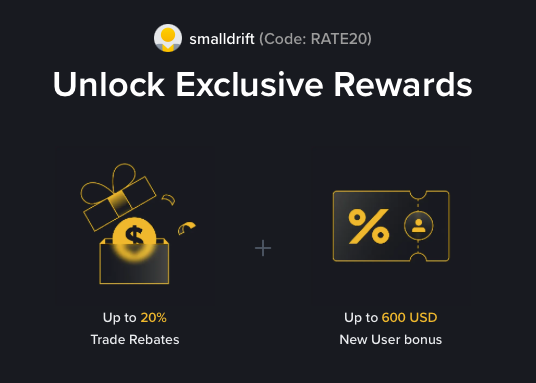
- Referral code: RATE20, pre-applied by this link
- Fee discount: 20%, shown on the Binance signup screen
- Additional rewards: Check Binance for current promotions and regional availability
Be wary of unofficial referral offers promising benefits they cannot show. The Binance signup screen lets you check the code and fee discount directly.
Compare Binance fees and available discounts →
SmallDrift may earn a commission when you sign up through this link. Trading involves risk, including loss of capital.
Related Articles


Explore Related Guides
Daily Crypto Market News
Follow Bitcoin price moves, major altcoins, and the events shaping the market.
Bitcoin ETF Flows Guide
Understand ETF inflows and outflows, and how to read them alongside price action.
Binance Fee Calculator
Learn how to estimate trading costs with referral and BNB discounts.
Verified Binance Referral Guide
See how RATE20 is applied and what to check on the Binance signup screen.