Limit vs Market Orders on Binance: When to Use Each
Understand the difference between limit and market orders on Binance. Save money by choosing the right order type.
Quick Comparison
| Feature | Limit Order | Market Order |
|---|---|---|
| Execution | At your price or better | Immediately at best price |
| Fee | Maker (lower) | Taker (higher) |
| Speed | May take time to fill | Instant |
| Price control | Full | None |
When to Use Limit Orders
1. Entering a Position (Not Urgent)
If BTC is at $100,000 and you want to buy at $99,500, place a limit buy at $99,500. You save on both price AND fees.
2. Taking Profit
Set a limit sell at your target price. It executes automatically when the price reaches your target.
3. Most Trading Scenarios
90% of the time, limit orders are the better choice. The fee savings add up significantly over time.
When to Use Market Orders
1. Emergency Exit
If the market is crashing and you need to exit NOW, use a market order. Speed is more important than fee savings.
2. Stop-Loss Execution
Stop-market orders ensure your stop-loss fills even in fast-moving markets.
3. Very Liquid Markets
On BTC/USDT with tight spreads, the difference between limit and market is minimal.
Fee Difference
Spot Trading
| Order Type | Standard | With Referral |
|---|---|---|
| Limit (Maker) | 0.10% | 0.08% |
| Market (Taker) | 0.10% | 0.08% |
On spot, maker and taker fees are the same at the base level.
Futures Trading
| Order Type | Standard | With Referral |
|---|---|---|
| Limit (Maker) | 0.02% | 0.016% |
| Market (Taker) | 0.05% | 0.04% |
Futures maker fees are 60% cheaper — this is where limit orders really shine.
Pro Tip: Post-Only Orders
Use “Post Only” mode to ensure your order is always a maker order. If it would fill immediately (becoming a taker), the order is rejected instead.
Verify Before You Sign Up — Don't Get Scammed
Many sites advertise fake referral discounts that don't actually apply. Before signing up through any referral link, always verify the referral code and discount rate shown on the Binance registration page. Here's proof of our verified referral:
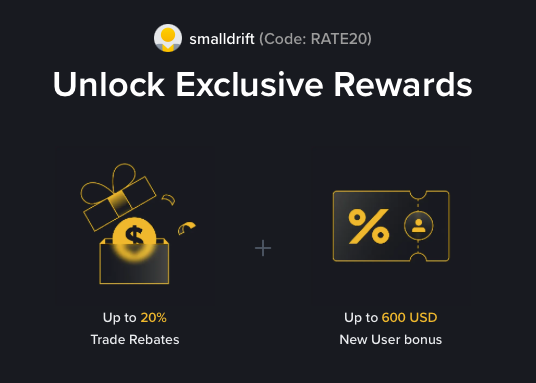
- Referral Code: RATE20
- Trade Rebate: Up to 20% on every trade (lifetime)
- New User Bonus: Up to 19,800 USD
If the registration page does not show these benefits, do not proceed. Only sign up when you can confirm the referral code and discount are applied.
Related Articles

Keep the Session Going With Stronger Hubs
Daily Crypto Market News
A fresher archive of daily market briefs, macro setups, and Bitcoin-led updates.
Bitcoin ETF Flows Guide
Understand what inflows and outflows actually mean, with recent examples and links.
Binance Fee Calculator
High-intent tool content that converts well and answers a clear search query.
Verified Binance Referral Guide
The core evergreen page for your highest-value signup intent.