Binance Copy Trading: 10% Profit Share, $10 Minimum — But 80% of Copiers Lose — Pakistan Guide
Complete Binance copy trading guide 2026: fees, profit sharing, risks, and how to pick lead traders. Use Binance referral code RATE20 for 20% discount on all fees. Tailored for Pakistan traders with PKR deposit methods.
For Pakistan Traders
This guide is tailored for traders in Pakistan. Sign up with referral code RATE20 for a 20% lifetime fee discount. Deposit PKR easily using local payment methods: Bank Transfer, JazzCash, Easypaisa.
Pakistan's crypto community is growing rapidly. P2P trading bypasses banking restrictions.
Binance Copy Trading lets you mirror expert traders with as little as $10. Lead traders take a 10% profit share. The platform processes over $34 trillion in annual volume across 300 million users. It sounds like free money — and that’s exactly the problem. The data shows that roughly 80% of copy traders don’t turn a sustained profit. The 20% who do follow a specific playbook that most beginners ignore.
Here’s everything you need to know about Binance Copy Trading in 2026 — the fees nobody reads, the risks nobody mentions, and the strategy that actually works.
How Binance Copy Trading Works
The concept is deceptively simple. You pick a Lead Trader from Binance’s ranked leaderboard. Every trade they make gets automatically replicated in your account — same direction, same proportional size, same stop-loss and take-profit levels. You don’t touch a button.
Binance offers two copy modes:
| Mode | How It Works | Best For |
|---|---|---|
| Fixed Amount | You allocate a set dollar amount per trade | Beginners who want predictable position sizes |
| Fixed Ratio | Your capital mirrors the lead trader’s allocation % | Experienced users who want proportional exposure |
Both modes work across spot and futures markets, giving you access to 500+ cryptocurrencies. Spot copy trading means you actually own the coins — your max loss is your allocated capital. Futures copy trading uses leverage, which amplifies both gains and losses. If a lead trader runs a 10x leverage position that drops 10%, you’re liquidated.
The distinction matters. Spot copy trading is training wheels. Futures copy trading is a motorcycle with no helmet. Know which one you’re on.
The Real Fee Structure
This is where most guides gloss over the details. Binance’s copy trading fees have multiple layers:
Fees for Copy Traders (Followers)
| Fee Type | Amount | When It Applies |
|---|---|---|
| Spot Trading Fee | 0.1% maker/taker | Every copied trade |
| Futures Maker Fee | 0.02% | Limit orders |
| Futures Taker Fee | 0.04% | Market orders |
| Profit Share | 10% minimum | Only on profits (high-water mark) |
| Referral Discount | -20% on all fees | With code RATE20 |
How Profit Sharing Actually Works
The 10% profit share sounds straightforward, but the mechanics matter:
-
High-water mark: You only pay profit share on net new profits. If your portfolio peaks at $1,200, drops to $1,100, then recovers to $1,250, you only owe profit share on the $50 above the previous peak — not the full $250 gain.
-
Settlement: Weekly cycle (Monday 00:00 UTC to Sunday 23:59 UTC). Profits distribute to lead traders the following Monday.
-
Realized profits only: Paper gains don’t trigger profit share. Only closed positions count, and fees are deducted first.
Fees for Lead Traders
| Earning Type | Amount | Details |
|---|---|---|
| Profit Share | 10–30% | From copiers’ profits |
| Fee Commission | 10% | Of copiers’ trading fees |
| Commission Cap | 3% of portfolio/week | Prevents fee farming |
| New Trader Bonus | 15% profit share | First week (if MDD ≤ 25%) |
The commission cap at 3% of portfolio balance per week is a critical detail. It means a lead trader can’t churn your account with excessive trades just to generate fee commissions. Binance designed this after wash-trading scandals were uncovered among some top-ranked VIP traders.
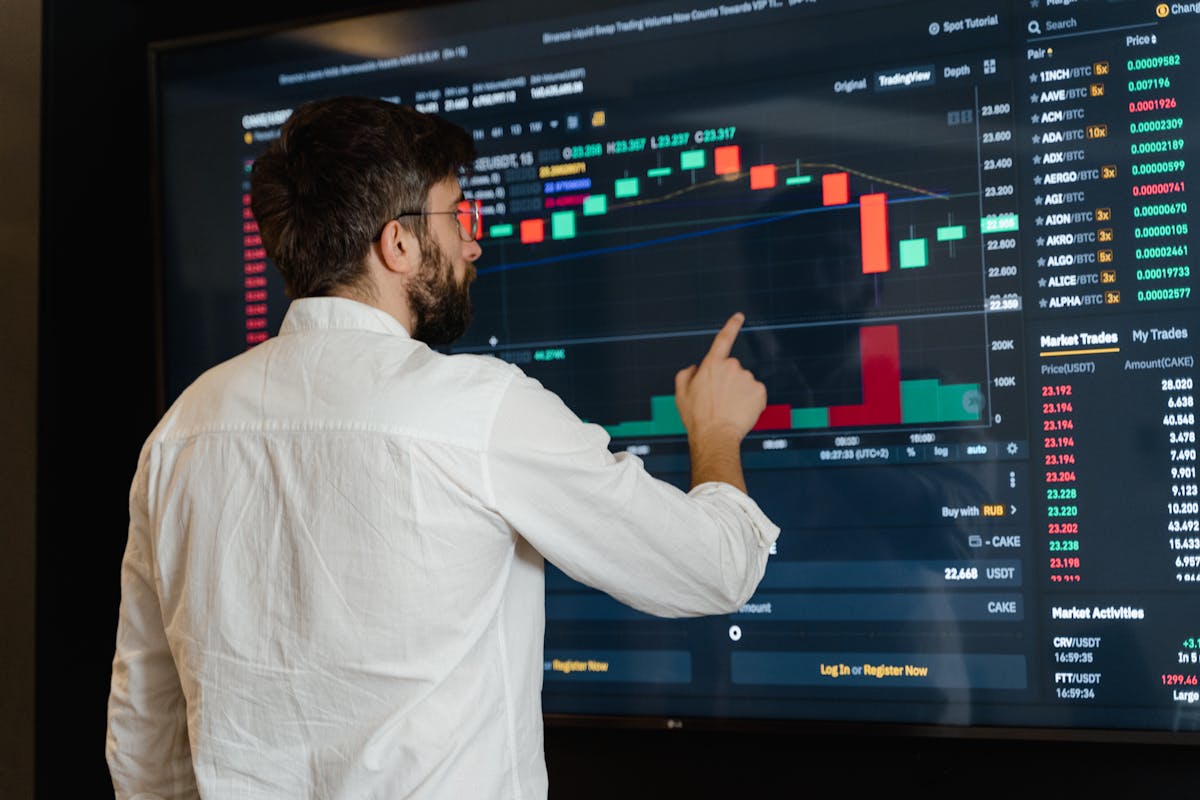
Start Copy Trading with Lower Fees
Copy trading fees compound fast — every copied trade generates maker/taker fees on top of profit sharing. Reducing your base trading fee by 20% makes a meaningful difference over hundreds of trades.
Sign up on Binance with 20% fee discount →
Use referral code RATE20 for a permanent 20% off all trading fees — including copied trades.
How to Pick a Lead Trader (Without Getting Burned)
This is where 80% of copy traders fail. They sort by highest return, pick the top name, and allocate their savings. Here’s what to actually look for:
The 5 Metrics That Matter
| Metric | What to Check | Red Flag |
|---|---|---|
| Track Record | 6–12+ months of history | Less than 90 days |
| Max Drawdown (MDD) | Below 25% is excellent | Above 50% = gambling |
| Win Rate | 55–70% is realistic | Above 90% (likely cherry-picked) |
| Sharpe Ratio | Above 1.5 is strong | Below 0.5 = not worth the risk |
| Average Trade Duration | Matches your time horizon | Scalper if you want swing trades |
Red Flags to Avoid
-
Extremely high returns with no drawdowns: If someone shows 500% returns with 5% max drawdown, the data is either cherry-picked, unrealistically short, or the trader is using martingale strategies that will eventually blow up.
-
Very high leverage (20x+): Lead traders using aggressive leverage will eventually hit a liquidation event. It’s not if, it’s when. On crypto’s typical 5–10% daily moves, 20x leverage means a 100% loss on a single bad day.
-
Short track records during bull markets: A trader who started in October 2025 and shows 200% returns isn’t skilled — they were long during the biggest bull run in crypto history. Look for traders who performed well through bear markets and high-volatility events.
-
Sudden strategy changes: If a trader’s profile shows spot trades for six months and then switches to 10x futures, they’re likely chasing returns. The strategy that built their reputation isn’t the one you’ll be copying.
The Elite Trader Threshold
Binance’s Elite Trader Program requires 300+ copy traders and $750,000+ AUM. These traders have skin in the game and have been vetted by the market. They’re not guaranteed profitable, but the barrier to entry filters out the worst actors.
The Risks Nobody Tells You About
Let’s be honest about what can go wrong:
1. Copy Lag (Slippage)
When a lead trader executes a trade, your copied order arrives milliseconds later. In calm markets, this doesn’t matter. During a flash crash or liquidation cascade — exactly when it matters most — the price can move significantly between the lead’s fill and yours.
Binance acknowledges that slippage caps can be exceeded, causing smaller fills or outright failures. You might think you’re copying a profitable scalper, but you’re getting consistently worse entries on every trade.
2. Survivorship Bias
The leaderboard only shows active traders. The ones who blew up their accounts, lost 80%, or quit after a bad month? Gone. You’re browsing a curated list of survivors, which makes the average performance look far better than reality.
3. Strategy Drift
A lead trader’s past performance reflects their past strategy. Nothing stops them from changing their approach tomorrow. The conservative swing trader you selected could start day-trading meme coins on 20x leverage. Your account follows automatically.
4. Emotional Interference
The irony of copy trading: it’s supposed to remove emotion from trading. But beginners constantly tinker — stopping copies during drawdowns, switching lead traders after a bad week, or overriding positions manually. This behavior consistently produces worse results than either pure copy trading or pure manual trading.
5. Market Manipulation Risk
Investigations have revealed that some top Binance VIPs engaged in wash-trading and pump-and-dump schemes. Following these traders amplifies hidden manipulation risk. Binance has implemented countermeasures (the commission cap, for example), but the risk hasn’t been eliminated.

Binance vs. Competitors: Copy Trading Comparison
How does Binance stack up against the other major copy trading platforms in 2026?
| Feature | Binance | Bitget | Bybit | OKX |
|---|---|---|---|---|
| Copy Trading Focus | Integrated feature | Purpose-built leader | Strong (derivatives) | Growing |
| Coins Available | 500+ | 1,300+ | 1,200+ | Broad |
| Spot Copy | Yes | Yes | Yes | Yes |
| Futures Copy | Yes | Yes | Yes | Yes |
| Min Copy Amount | $10 | $10 | $10 | $10 |
| Profit Share | 10% | 10% | 10–15% | 8–13% |
| Spot Fee | 0.1% | 0.1% | 0.1% | 0.1% |
| Futures Taker | 0.04% | 0.042% | 0.055% | 0.05% |
| Referral Discount | 20% (RATE20) | 10–20% | 20% | 20% |
| Liquidity | Highest | High | Very High | High |
| SAFU Insurance | $1B+ | Yes | Yes | Yes |
Bitget is the specialist — purpose-built for social trading with stronger analytics and one-click copy features. Binance wins on liquidity, ecosystem breadth, and the sheer number of tradable assets. If you’re already on Binance for spot, futures, staking, and earn products, adding copy trading into the same account makes sense. If copy trading is your only use case, Bitget deserves a look.
The key Binance advantage: futures taker fees at 0.04% are the lowest among major platforms. For frequent copy trading, this compounds into significant savings.
The Playbook That Works
Based on the data, here’s how the profitable 20% approach copy trading:
-
Start with mock trading: Binance offers simulated copy trading. Use it for 2–4 weeks to test lead traders without risking capital. Most beginners skip this entirely.
-
Diversify across 3–5 lead traders: Don’t put everything behind one trader. Mix strategy types — one swing trader, one spot-focused, one conservative futures trader with low leverage.
-
Cap futures leverage at 5x: Even if a lead trader uses 10x or 20x, set your own leverage limit lower. Binance lets followers override leverage settings.
-
Set portfolio-level stop-loss: Decide your maximum acceptable loss (e.g., 15% of allocated capital) before you start. If you hit it, stop copying. Don’t negotiate with yourself.
-
Review monthly, not daily: Checking performance every hour leads to emotional interference. Set a monthly review cycle. If a lead trader’s MDD exceeds your threshold, replace them — but don’t panic-switch after a single bad week.
-
Allocate only discretionary capital: Never copy trade with money you can’t afford to lose. The 10% profit share, trading fees, and inherent market risk mean you need significant positive performance just to break even.
Stack Your Fee Savings
Every copied trade incurs trading fees. Over hundreds of trades per month, a 20% fee reduction adds up to real money.
Stack your discounts on Binance:
- 20% off — Use referral code RATE20 at signup
- 25% off — Pay fees with BNB token
- Maker discount — Use limit orders for even lower futures fees
Effective fee: as low as ~0.06% per trade.
Start trading on Binance with maximum discount →
For the complete guide to maximizing savings, see Get 20% off with code RATE20.
The Bottom Line
Binance Copy Trading is a powerful tool — but a tool is only as good as the person using it. The platform’s $10 minimum, deep liquidity, and comprehensive lead trader analytics make it the most accessible copy trading product on the market. The 10% profit share with a high-water mark is fair. The futures taker fees are the lowest in the industry.
But none of that matters if you pick the wrong trader, use too much leverage, or treat it like a savings account. Copy trading is trading. The risks are real. The losses are yours.
Approach it like a portfolio allocation decision — not a get-rich-quick scheme — and you’ll already be ahead of 80% of participants.
How does Binance copy trading work in 2026?
Binance copy trading automatically mirrors a lead trader’s positions in your account. You select a lead trader from a ranked leaderboard, choose between Fixed Amount or Fixed Ratio mode, and allocate capital. All trades — including entries, exits, stop-losses, and take-profits — are replicated proportionally. Available for both spot (500+ coins) and futures markets, with a minimum of $10 to start.
What are Binance copy trading fees?
Binance charges standard trading fees (0.1% spot, 0.02–0.04% futures) plus a 10% profit share on net gains. The profit share uses a high-water mark mechanism — you only pay on profits above the previous peak. Lead traders also earn a 10% commission on your trading fees, capped at 3% of your portfolio per week. Use referral code RATE20 for 20% off all trading fees.
What is the best Binance referral code?
The best Binance referral code is RATE20, giving you a permanent 20% discount on all trading fees — including copied trades. Combined with BNB fee payment (25% off), your effective fee drops to ~0.06% per trade.
Create your Binance account with 20% fee discount →
Referral code: RATE20 — permanent 20% off all trading fees.
This article is for informational purposes only and does not constitute financial advice. Always do your own research before making investment decisions.
How to Deposit PKR on Binance
- Go to Trade → P2P on Binance
- Select Buy USDT with PKR
- Choose a payment method:
- Bank Transfer
- JazzCash
- Easypaisa
- Select a verified merchant and complete the trade
- Use your USDT to trade any cryptocurrency on Binance
Verify Before You Sign Up — Don't Get Scammed
Many sites advertise fake referral discounts that don't actually apply. Before signing up through any referral link, always verify the referral code and discount rate shown on the Binance registration page. Here's proof of our verified referral:
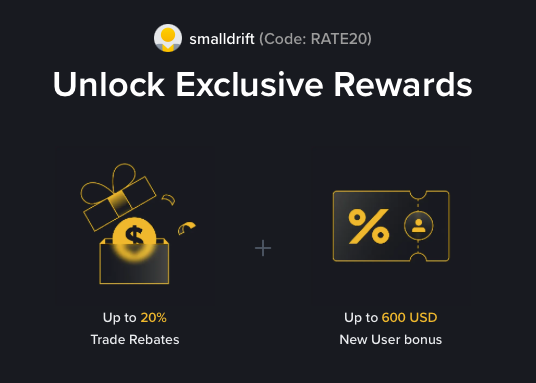
- Referral Code: RATE20
- Trade Rebate: Up to 20% on every trade (lifetime)
- New User Bonus: Up to 600 USD
If the registration page does not show these benefits, do not proceed. Only sign up when you can confirm the referral code and discount are applied.