5 Binance Futures Trading Strategies for Beginners
Proven futures trading strategies for Binance. From trend following to scalping — with entry rules and risk management.

Strategy 1: Trend Following
The simplest and most reliable strategy for beginners.
Rules:
- Use 4-hour or daily chart
- Identify the trend direction (higher highs/lows = uptrend)
- Enter in the trend direction on pullbacks
- Stop-loss below the last swing low (for longs)
- Take profit at 2x your risk
Leverage: 2-3x Win rate: ~40-50% but large winners compensate
Strategy 2: Support/Resistance Breakout
Trade when price breaks through key levels.
Rules:
- Identify strong support/resistance on the 4h chart
- Wait for a candle to close above resistance (for longs)
- Enter on the next candle
- Stop-loss below the broken level
- Target: Distance of the previous range
Leverage: 3-5x Watch for: False breakouts (use volume confirmation)
Strategy 3: Moving Average Crossover
Simple mechanical strategy.
Setup:
- 20 EMA and 50 EMA on 1h chart
- Long when 20 EMA crosses above 50 EMA
- Short when 20 EMA crosses below 50 EMA
- Stop-loss: 1 ATR below entry
- Take-profit: 2 ATR from entry
Leverage: 2-3x Best in: Trending markets (avoid in choppy conditions)
Strategy 4: Funding Rate Strategy
Exploit extreme funding rates.
Rules:
- When funding rate > 0.05%: Look for short entries
- When funding rate < -0.03%: Look for long entries
- Extreme funding often precedes reversals
- Combine with technical analysis for entry timing
Leverage: 2x Risk: Market can stay irrational longer than you can stay solvent
Strategy 5: Dollar-Cost Averaging into Futures
For longer-term directional bets.
Rules:
- Determine your directional bias (bullish/bearish)
- Split your position into 3-5 entries
- Enter at different price levels
- Use very low leverage (2x max)
- Wide stop-loss (10-15%)
Best for: High-conviction trades where you want better average entry
Key Principles for All Strategies
- Backtest before using real money
- Start small — use minimum position sizes
- Follow your rules — no emotional deviations
- Journal every trade — learn from results
- Use referral code RATE20 — save 20% on every trade’s fees
Verify Before You Sign Up — Don't Get Scammed
Many sites advertise fake referral discounts that don't actually apply. Before signing up through any referral link, always verify the referral code and discount rate shown on the Binance registration page. Here's proof of our verified referral:
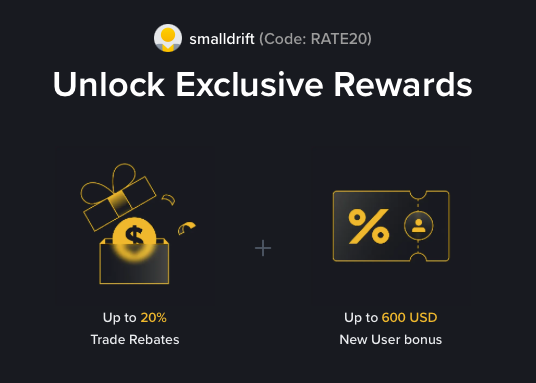
- Referral Code: RATE20
- Trade Rebate: Up to 20% on every trade (lifetime)
- New User Bonus: Up to 19,800 USD
If the registration page does not show these benefits, do not proceed. Only sign up when you can confirm the referral code and discount are applied.
Related Articles
Keep the Session Going With Stronger Hubs
Daily Crypto Market News
A fresher archive of daily market briefs, macro setups, and Bitcoin-led updates.
Bitcoin ETF Flows Guide
Understand what inflows and outflows actually mean, with recent examples and links.
Binance Fee Calculator
High-intent tool content that converts well and answers a clear search query.
Verified Binance Referral Guide
The core evergreen page for your highest-value signup intent.