307 Days in the Same Range. Circle Gets a Bank Charter. Swift Puts 17 Banks On-Chain.
BTC stuck in $60K-$70K for 307 days. Circle gets OCC trust bank charter. Swift launches tokenized deposits with 17 banks. Binance referral code RATE20 for 20% discount.
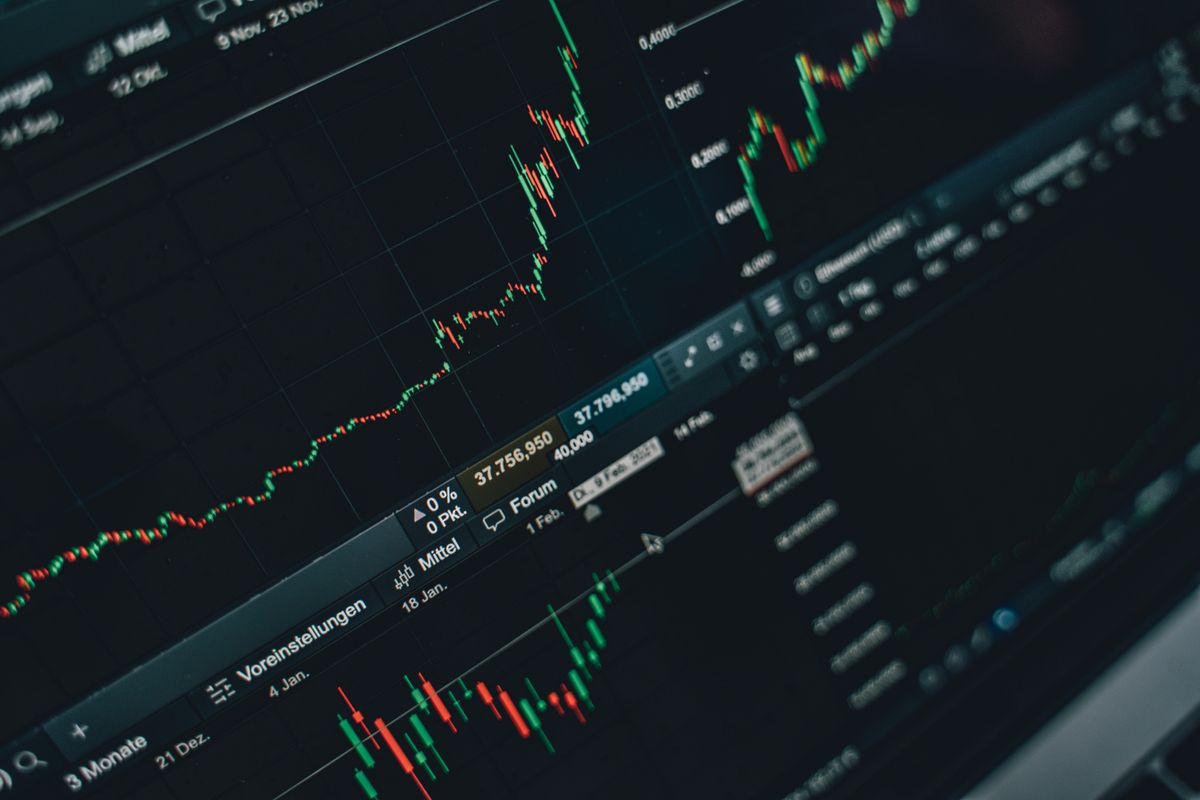
Bitcoin has traded between $60,000 and $70,000 for 307 consecutive days — the third longest consolidation in any $10,000 price band in its history. Only the 2018 bear market ($10K–$20K) and the 2022 crash ($20K–$30K) lasted longer. While BTC sits at $64,150 building the largest cost-basis cluster in its history, two things happened this week that will matter long after this range breaks: Circle became a federally chartered bank, and Swift put 17 of the world’s largest banks on an Ethereum-based blockchain.
The infrastructure for the next cycle is being built during this one. The question is whether anyone notices before the range breaks.
Circle Is Now a Bank. That Changes Everything for USDC.
The OCC granted Circle its final approval to establish Circle National Trust — a federally chartered national trust bank — on July 10. Circle’s stock jumped 16%, its biggest single-day move in two months.
| Detail | Value |
|---|---|
| Charter type | National trust bank (OCC) |
| Bank name | Circle National Trust |
| Initial services | Fiduciary digital asset custody |
| Future capability | USDC Reserve management |
| Application filed | June 30, 2025 |
| Conditional approval | December 2025 |
| Final approval | July 10, 2026 |
| CRCL stock reaction | +16% |
This isn’t just a regulatory checkbox. Until now, the cash and US Treasuries backing USDC — currently worth over $50 billion — have been held by third-party banking partners like BNY Mellon. With the trust bank charter, Circle can eventually hold those reserves under its own federally regulated custody.
The implications cascade:
For USDC holders: Your stablecoin’s reserves will eventually be held by a federally supervised bank, not a partnership agreement with one. That’s a material upgrade in counterparty risk.
For the industry: Circle joins Paxos, BitGo, Ripple, and Fidelity as firms with OCC-granted national trust bank charters. Five crypto-native companies now operate under the same federal banking framework as JPMorgan and Goldman Sachs. The regulatory moat between “crypto” and “banking” just got significantly thinner.
For Open USD: Remember the stablecoin backed by BlackRock, Visa, Mastercard, Coinbase, and Ripple that launched on July 1? Circle’s USDC now has a federally chartered bank behind it. Open USD doesn’t — yet. The competition just shifted from “who has better partners” to “who has better regulation.”
Two weeks ago, Circle’s stock crashed 18% when Open USD launched. This week it rallied 16% on the bank charter. The market is telling you that regulatory infrastructure matters more than corporate partnerships.
Swift Just Put 17 Banks on an Ethereum Layer 2
If Circle getting a bank charter is crypto coming to banking, Swift’s announcement is banking coming to crypto.
On July 9, Swift — the messaging network used by 11,500+ financial institutions — launched a blockchain-based shared ledger for tokenized deposit payments. Seventeen banks across six continents are piloting it.
| Bank | Region |
|---|---|
| HSBC | UK/Asia |
| UBS | Switzerland |
| Citi | US |
| Wells Fargo | US |
| BNP Paribas | France |
| BNY Mellon | US |
| Standard Chartered | UK |
| DBS | Singapore |
| MUFG | Japan |
| ANZ | Australia |
| + 7 more | Global |
The ledger is built on Linea — an Ethereum Layer 2 developed by ConsenSys. It uses a permissioned EVM-compatible model based on Hyperledger Besu. Banks can now settle tokenized deposit payments 24/7, including overnight and on weekends, before completing final settlement through existing systems.
Read that again: HSBC, UBS, Citi, and Wells Fargo are running on an Ethereum-derived blockchain for cross-border payments. Swift built the entire system in nine months.
UBS Group Head of Digital Assets Andreas Kubli said: “We see interoperability as the key enabler for scaling tokenised deposits beyond individual institutions.” When UBS uses the word “interoperability,” they’re talking about the same concept that crypto has been trying to solve for a decade — except they’re doing it through a permissioned consortium that controls $50+ trillion in combined assets.
For crypto, the signal is clear: traditional finance isn’t building its own blockchain from scratch. It’s building on Ethereum’s infrastructure. Even when the access is permissioned, the technology stack is recognizable. The more banks build on EVM-compatible systems, the shorter the distance between their permissioned world and the permissionless one.
Trade the Infrastructure Shift
Circle has a bank charter. Swift has 17 banks on-chain. The infrastructure for the next cycle is being built right now — at $64K, not at $126K. Positioning early with optimized fees matters.
Sign up on Binance with 20% fee discount →
Use referral code RATE20 for a permanent 20% off all trading fees.
307 Days: The Range That Won’t Break
Bitcoin’s $60,000–$70,000 consolidation is now the third longest in history, according to Glassnode. Only two ranges have lasted longer:
| Range | Duration | What Followed |
|---|---|---|
| $10K–$20K (2018–2019) | ~440 days | Breakout to $64K (3.2x) |
| $20K–$30K (2022–2023) | ~380 days | Breakout to $126K (4.2x) |
| $60K–$70K (2025–2026) | 307 days | ? |
The pattern is consistent: extended consolidation ranges in Bitcoin precede the next major directional move. The question is whether that move goes up or down.
The on-chain data favors accumulation. Roughly 6% of Bitcoin’s circulating supply last moved between $58,000 and $64,000, creating the largest cluster of cost-basis levels in Bitcoin’s history. This means a massive number of holders bought in this range and are sitting at or near breakeven. They’re not selling — they’re waiting.
BTC continues to trade above its 200-week moving average at ~$62,873 — a level that has historically marked the absolute floor in every bear market cycle. Holding above this line while building a cost-basis cluster is what accumulation phases look like on-chain. It just doesn’t feel like it when the Fear & Greed Index reads 26.
ETF Flows: The Mixed Signal
This week’s ETF data tells a conflicting story:
| Date | Flow | Notable |
|---|---|---|
| July 7 (Mon) | +$266M | Strong Monday reopen |
| July 8 (Tue) | +$24M | Weak but positive |
| July 9 (Wed) | -$95M | Fidelity/ARK led outflows |
| July 10 (Thu) | +$90M | Bounce back |
Four sessions, three positive, one negative. Net: +$285 million for the week through Thursday. Not the 5-day streak that flow-following strategies need to confirm a regime change, but materially better than June’s hemorrhaging.
The $510 million in early-July inflows recovered roughly 9% of the $5.4 billion in year-to-date outflows. At this pace, it would take about three more months of steady inflows to get back to breakeven for 2026. That’s a long road — but the direction has changed, and direction matters more than pace.
Stack Your Fee Discounts
Whether you’re accumulating in the range or waiting for the breakout, every basis point counts:
- 20% off — Use referral code RATE20 at signup
- 25% off — Pay fees with BNB token
- Maker discount — Use limit orders for even lower futures fees
Effective fee: as low as ~0.06% per trade.
Start trading on Binance with maximum discount →
For the complete breakdown of stacking discounts, see our guide to the RATE20 code.
The Week Ahead: CPI and the Senate
| Date | Event | Impact |
|---|---|---|
| July 13 (Sun) | Senate returns from recess | CLARITY Act window opens |
| July 15 (Tue) | CPI release | Inflation data for FOMC |
| July 16 (Wed) | PPI release | Producer inflation |
| July 29 | FOMC meeting | Rate decision |
The CPI print on Tuesday is the single most important data point of the month. The last reading (May CPI on June 10) came in at 4.2% YoY — in line with expectations but still elevated. With oil rising on Hormuz tensions, a hotter-than-expected print could push rate-hike expectations higher and crack the $60K support. A cooler print would validate Warsh’s “inflation risks eased” comment and give the recovery room to run toward $65,600–$67,000.
Key levels:
| Level | Significance |
|---|---|
| $60,000 | Range floor / psychological support |
| $62,873 | 200-week MA — must hold |
| $64,150 | Current price |
| $65,742 | 50-month EMA — breakout signal |
| $66,600–$67,600 | Supply zone / resistance |
| $70,000 | Range ceiling |
The Bottom Line
The surface story says Bitcoin is stuck. 307 days in the same $10,000 band. Fear & Greed at 26. Half of its value gone from the peak. The chart looks like a patient on life support.
The infrastructure story says something different. Circle just became a federally chartered bank. Swift put 17 of the world’s largest banks on an Ethereum Layer 2. Five crypto-native firms now hold OCC trust bank charters. Robinhood launched a blockchain. Binance hit $1 billion in stock trading AUM in 30 days. The pipes connecting crypto to traditional finance are being built at a pace that has no historical precedent.
Bear markets are when infrastructure gets built. Bull markets are when it gets used. The 307-day range will break — ranges always do. The question isn’t if but which direction and when. If the CPI cooperates on Tuesday and the CLARITY Act moves when the Senate returns, the direction becomes clearer. If inflation surprises hot and regulation stalls, the range breaks down.
Either way, the infrastructure will be ready. The builders don’t care about the range — they’re building for what comes after.
Create your Binance account with 20% fee discount →
Referral code: RATE20 — permanent 20% off all trading fees.
What is the best Binance referral code in July 2026?
The best Binance referral code is RATE20, which gives you a permanent 20% discount on all trading fees — both spot and futures. This is the maximum referral discount available.
How much can I save with Binance referral code RATE20?
| Monthly Volume | Standard Fee | With RATE20 (20% off) | Monthly Savings |
|---|---|---|---|
| $10,000 | $10.00 | $8.00 | $2.00 |
| $100,000 | $100.00 | $80.00 | $20.00 |
| $1,000,000 | $1,000.00 | $800.00 | $200.00 |
Stack with BNB payment (25% off) for an effective fee as low as 0.06%.
How long has Bitcoin been in the $60K–$70K range?
Bitcoin has traded between $60,000 and $70,000 for 307 consecutive days as of July 10, 2026 — the third longest consolidation in any $10,000 price band in its history. According to Glassnode, only the 2018 bear market ($10K–$20K, ~440 days) and the 2022 crash ($20K–$30K, ~380 days) lasted longer. Roughly 6% of Bitcoin’s circulating supply has its cost basis between $58,000 and $64,000, creating the largest on-chain cost-basis cluster in Bitcoin’s history. The 200-week moving average at ~$62,873 continues to hold as support. Historically, extended consolidation ranges in Bitcoin precede major directional breakouts.
This article is for informational purposes only and does not constitute financial advice. Always do your own research before making investment decisions.
Get 20% Off Binance Trading Fees with RATE20
New to Binance? Open the official signup page with RATE20 already applied for a 20% trading-fee discount. You do not need to copy or type the code. Review the referral details before completing registration.
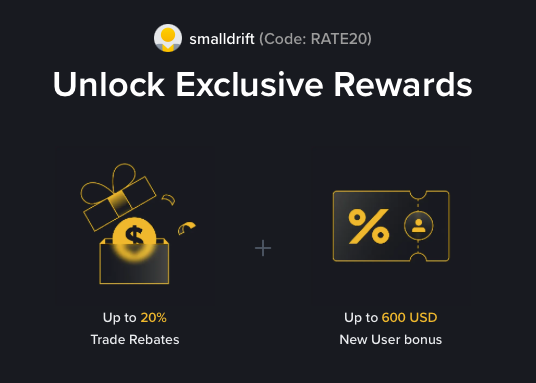
- Referral code: RATE20, pre-applied by this link
- Fee discount: 20%, shown on the Binance signup screen
- Additional rewards: Check Binance for current promotions and regional availability
Be wary of unofficial referral offers promising benefits they cannot show. The Binance signup screen lets you check the code and fee discount directly.
Compare Binance fees and available discounts →
SmallDrift may earn a commission when you sign up through this link. Trading involves risk, including loss of capital.
Related Articles

Explore Related Guides
Daily Crypto Market News
Follow Bitcoin price moves, major altcoins, and the events shaping the market.
Bitcoin ETF Flows Guide
Understand ETF inflows and outflows, and how to read them alongside price action.
Binance Fee Calculator
Learn how to estimate trading costs with referral and BNB discounts.
Verified Binance Referral Guide
See how RATE20 is applied and what to check on the Binance signup screen.