Bitcoin’s $80K Wall Is Holding. ETF Buyers Added $987M — Sep. 7
Bitcoin is near $79.6K after $986.9M of weekly spot-ETF inflows. Here is why $80K still needs confirmation and what to watch next.
Bitcoin is sitting near $79,648 even after U.S. spot-Bitcoin ETFs took in $986.9 million last week. That is not the clean breakout investors might expect from nearly a billion dollars of reported weekly demand. It is a useful reminder that $80,000 is not a finish line; it is the market’s current argument about how much new buying can actually absorb.
The latest Binance BTC/USDT tape put the 24-hour high at $80,559.99 and the low at $79,233, with about $815.4 million in quote turnover. In other words, the market has visited the other side of $80K and come back. The difference between visiting and living somewhere has caused more trading mistakes than any indicator ever will.
Does $987M of ETF demand mean Bitcoin has broken out?
No. The flow backdrop is constructive, but Bitcoin has not confirmed acceptance above $80K. The Block’s weekly flow report puts U.S. spot-BTC ETF net inflows at $986.9 million for last week—the third positive week in a row. It also reports $218.4 million of weekly net inflows for spot Ether ETFs. That is material institutional demand, not a rounding error in a large market.
But flows and price do different jobs. ETF flows tell you that regulated wrappers saw net subscriptions over completed trading sessions. Price tells you what happens when that demand meets available spot supply, futures positioning, macro risk, and traders who consider $80K a very convenient place to take profits. One signal can be strong while the other remains unresolved.
| September 7 market snapshot | Latest reading | Why it matters |
|---|---|---|
| BTC/USDT last price | $79,648.20 | Bitcoin remains just below the pivotal round number |
| BTC 24-hour change | -0.16% | The market is steady, not in a confirmed momentum expansion |
| BTC 24-hour high / low | $80,559.99 / $79,233.00 | Price crossed $80K but did not hold it in the rolling window |
| BTC/USDT quote turnover | $815.4M | The test is happening in a deep, liquid market |
| U.S. spot-BTC ETF flow, last week | +$986.9M | Institutional demand extended to a third positive week |
| U.S. spot-ETH ETF flow, last week | +$218.4M | The regulated demand story was not BTC-only |
The price and turnover figures come from Binance’s live BTC/USDT 24-hour ticker, captured September 7. The rolling-window qualification matters: it is a current market pulse, not a New York close. CoinGecko’s global market data remains useful for the wider context, but exchange-specific liquidity is the cleaner lens for an execution-level read.

Why has $80K not turned into support?
Because a level becomes support only after sellers fail to push price back below it. Bitcoin briefly traded above $80K in the latest Binance window, then returned below it. That is a test, not an acceptance signal. The nearest evidence of acceptance would be a hold above the pivot followed by a successful retest with active spot participation.
Independent technical coverage is pointing to the same broad map, even if exact intraday prints differ by venue. DailyForex’s September 7 analysis frames $76,000 as key support and $82,000 as resistance; UseTheBitcoin’s review describes repeated selling in roughly the $80,500–$82,500 area. Treat these as decision zones, not predictions. The market does not owe anyone a symmetrical triangle with tasteful labels.
| Decision area | Constructive evidence | Caution / invalidation evidence |
|---|---|---|
| $80,000 pivot | Price holds above it after a retest | Another fast rejection into the $79Ks |
| $79,233 recent low | Buyers defend the rolling-window low with strong spot activity | A loss followed by weak or failed reclaim attempts |
| $76,000–$78,000 support zone | The broader range continues to contain selling | A sustained break makes the recovery structure less reliable |
| $80,500–$82,500 supply zone | Price clears it with follow-through and healthy turnover | A wick into the zone followed by fading participation |
| ETF demand | Further positive completed-session flows alongside price acceptance | Flows weaken while price cannot hold the pivot |
The contrarian point is simple: ETF demand is a tailwind, not a cheat code. It is encouraging that the reported flow streak is positive; it would be much more persuasive if BTC stopped treating $80K as a revolving door. Until then, a patient read beats a dramatic one.
Trade this setup with conditions, not conviction
The useful response to an unresolved level is not to guess louder. It is to decide what would change your mind before the market gives you a reason to improvise. For traders monitoring BTC and the liquid majors, a deep spot market helps—but the risk plan should exist before the order ticket does.
Check the current Binance signup offer with code RATE20 →
Use referral code RATE20 during eligible new-account signup. Confirm the code and current offer shown by Binance before completing registration.
Are liquid altcoins confirming a broader move?
Not yet. ETH, SOL, XRP, and BNB remain highly liquid, but all four were modestly lower in the latest Binance 24-hour snapshot. That does not prove risk appetite has disappeared. It does say the tape is not currently handing out an effortless broad-market confirmation.
| Liquid Binance pair | Last price | 24-hour move | USDT turnover | What to watch |
|---|---|---|---|---|
| ETH/USDT | $2,496.79 | -0.35% | $567.4M | Relative strength against BTC and sustained depth |
| SOL/USDT | $105.07 | -0.29% | $277.9M | Whether high-beta participation returns with BTC acceptance |
| XRP/USDT | $1.4082 | -0.70% | $125.6M | Whether selling settles without liquidity thinning |
| BNB/USDT | $745.36 | -1.96% | $120.5M | Whether exchange-ecosystem strength returns versus BTC |
Those readings are from the live Binance ETH, SOL, XRP, and BNB tickers, captured September 7. The important word is liquid. These are useful breadth gauges because meaningful turnover makes the signal less dependent on a thin book or one impulsive print.
Still, liquidity is not an endorsement. Binance’s September 4 Monitoring Tag update added AVA, GNS, SCR, and TOWNS to its higher-risk monitoring list, a neat reminder that a listed token can remain a bad idea. Watch the deep pairs for breadth; do not confuse that with permission to abandon due diligence.

What would confirm the constructive case?
Bitcoin holding above $80K after a retest, continued positive ETF data, and improving relative strength in ETH and SOL would make the constructive case more credible. None of those inputs needs to be perfect. They do need to stop contradicting one another.
Here is the practical checklist:
- BTC accepts above $80K rather than merely touching it.
- Spot turnover stays healthy as price retests the level.
- The next reported ETF sessions remain net positive or at least do not reverse sharply.
- ETH and SOL stop lagging BTC, while deep-pair turnover remains intact.
This approach is deliberately less exciting than reacting to a single flow headline. It is also more falsifiable. The market may confirm, pause, or fail; each outcome asks for a different response. That is the point.
Save on costs before you add risk
Before you trade, compare the current referral offer with the applicable fee schedule, product, order type, and BNB fee setting. Each can change the effective cost. A good market read can still lose to sloppy execution; the invoice is simply less cinematic.
Use the SmallDrift fee calculator before you trade →
For the code, signup checks, and affiliate disclosure, see the Binance referral-code guide. You can also review the canonical Binance referral code and signup checks before funding an account.
What would invalidate the near-term recovery case?
A sustained loss of the $79,233 recent low, followed by failed reclaim attempts and narrowing altcoin participation, would weaken the immediate recovery thesis. A deeper break through the $76,000–$78,000 support zone would put the broader range back in control. That would not settle the whole Bitcoin cycle. It would only say this particular push through $80K was not ready.
The distinction keeps risk honest. A view that cannot be invalidated is not analysis; it is decor.
FAQ
Why can Bitcoin remain below $80K despite $987M of ETF inflows?
Because ETF flows are only one demand channel, while Bitcoin also prices available supply, derivatives positioning, macro news, and continuous global trading. The $986.9M weekly figure is constructive completed-session data, but price must still absorb sellers around the pivot in real time.
Is a move above $80K enough to call a breakout?
No. A breakout needs acceptance: a hold above the level, a successful retest, and sustained spot participation. The latest Binance window already showed a trade above $80K and a return below it, which is precisely why the retest matters.
Are ETH, SOL, XRP, and BNB a signal to buy altcoins?
No. They are liquid breadth gauges, not recommendations or price calls. On September 7, each was modestly lower in Binance’s rolling 24-hour snapshot; watch relative strength and turnover, then make an independent risk decision.
Open the official Binance signup page with code RATE20 →
Referral code: RATE20. Verify the code and the current eligible offer on Binance before finishing signup.
This article is for informational purposes only and does not constitute financial advice. Always do your own research before making investment decisions.
Market-data note: Prices, volumes, and percentage changes are snapshots from the research time stated in this article, not live quotes. Linked market pages show current data and may differ from these historical figures.
Get 20% Off Binance Trading Fees with RATE20
New to Binance? Open the official signup page with RATE20 already applied for a 20% trading-fee discount. You do not need to copy or type the code. Review the referral details before completing registration.
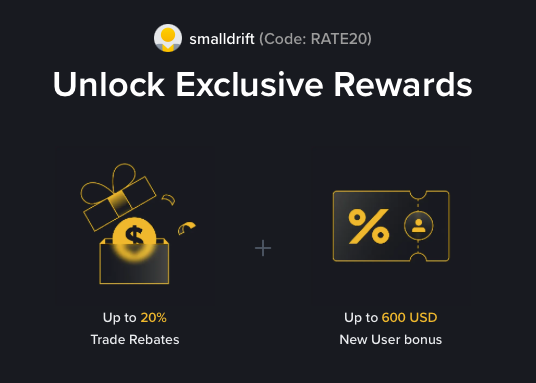
- Referral code: RATE20, pre-applied by this link
- Fee discount: 20%, shown on the Binance signup screen
- Additional rewards: Check Binance for current promotions and regional availability
Be wary of unofficial referral offers promising benefits they cannot show. The Binance signup screen lets you check the code and fee discount directly.
Compare Binance fees and available discounts →
SmallDrift may earn a commission when you sign up through this link. Trading involves risk, including loss of capital.
Related Articles



Explore Related Guides
Daily Crypto Market News
Follow Bitcoin price moves, major altcoins, and the events shaping the market.
Bitcoin ETF Flows Guide
Understand ETF inflows and outflows, and how to read them alongside price action.
Binance Fee Calculator
Learn how to estimate trading costs with referral and BNB discounts.
Verified Binance Referral Guide
See how RATE20 is applied and what to check on the Binance signup screen.