BTC's $731M ETF Day Hit $80K — September 5
Bitcoin sits near $79.6K after $730.9M of U.S. spot-ETF inflows. Here is the $80K test, the liquidity data, and the risk checklist.

Bitcoin absorbed $730.9 million of U.S. spot-ETF inflows and still could not keep $80,000. That is the whole market in one slightly rude sentence: large institutional demand is real, but sellers are still waiting above the obvious round number. BTC last traded near $79,639 on Binance, down 1.50% over 24 hours, after printing a $81,423 high and a $78,660 low. If you are deciding whether this is a recovery or another range trap, the answer is not hidden in a prediction—it is in what price and flows do next.
Did $731M of ETF inflows make Bitcoin bullish?
No: the flow is constructive evidence, not a completed breakout. The $730.9M net intake on September 3 was the biggest one-day intake since January 14, according to The Block’s report on SoSoValue data. BlackRock’s IBIT accounted for about $454M, with six other funds also positive. That is meaningful absorption from a buyer base that does not need a meme to open its wallet.
But flow data and market structure answer different questions. The former says there was a substantial buyer. The latter asks whether that buyer can clear the supply stacked around $80K–$82K. So far, BTC has poked above $80K and been pushed back. A good fund-flow print can coexist with a bad short-term candle; markets are talented at holding two inconvenient facts at once.
The live tape puts that distinction in numbers. Binance’s BTC/USDT 24-hour ticker showed roughly $1.39B in quoted spot turnover at the time of writing. That is enough liquidity to treat the move seriously, but it is not a guarantee that every $80K test becomes support.
| September 5 market snapshot | Latest reading | What it says |
|---|---|---|
| BTC/USDT | $79,639 | Price remains below the round-number pivot |
| BTC 24h change | -1.50% | The post-flow tape is still fragile |
| BTC 24h high / low | $81,423 / $78,660 | A wide intraday rejection bracketed the decision zone |
| BTC/USDT 24h quote volume | $1.39B | The level is being tested in deep spot liquidity |
| U.S. spot-BTC ETF net flow, Sept. 3 | +$730.9M | Institutional demand returned forcefully |
The broader market has not provided a clean risk-on confirmation either. CoinGecko’s global market data placed total crypto capitalization near $2.70T at the latest update. That is a useful backdrop, not a permission slip. A market can be large and still be indecisive.

Why $80K matters more than the headline flow
$80K is the test because it is both a psychological marker and the center of recent failed acceptance. Recent analysis put the nearby seller zone at roughly $81,400–$82,000, with support around $78,000; Invezz’s September 4 market note also flagged the same macro sensitivity. This is not mystical line-drawing. It is a practical way to read where bids and offers have repeatedly met.
The current setup is better described as a decision ladder than as a target list:
| Level or condition | Why it matters | What would count as useful evidence |
|---|---|---|
| $78,000–$78,660 | Recent support / intraday low region | Buyers defend it on rising spot activity |
| $80,000 | Range pivot and psychological threshold | BTC closes above it and subsequently holds it |
| $81,400–$82,000 | Recent high and nearby seller zone | A break through with follow-through rather than a wick |
| ETF flow continuity | Institutional-demand check | More net inflows, not one isolated print |
That last row is the part people skip. The first big ETF day can be genuine demand and still be followed by a pause. The cleaner read is whether the next reported sessions maintain positive flows while BTC can accept above the pivot. If both occur, the market is showing demand and price acceptance. If flows fade while $80K rejects again, the setup is telling a different story.
The macro calendar can make that distinction brutally fast. BTC slipped after U.S. employment data revived concern over tighter policy expectations, as the September 5 market recap described. Crypto is still a 24/7 market, but it is not immune to the price of dollars. The Fed held rates; Bitcoin held its breath. Neither blinked.
Trade this setup with a checklist, not a prophecy
A sharp move around a widely watched level invites leverage. That is usually when a simple operating rule earns its keep: decide what must happen before you act, and decide what changes your mind before the trade is open. Use spot-flow persistence, price acceptance, and a level that clearly proves you wrong. Size only after the rules are written.
For traders who need a liquid venue to monitor the spot pairs behind this move, Binance offers deep BTC and major-altcoin markets. The point is execution discipline, not chasing a green candle.
Check the current Binance signup offer with code RATE20 →
Use referral code RATE20 during eligible new-account signup. Confirm the code and current offer shown by Binance before completing registration.
Which liquid altcoins are worth watching now?
ETH, XRP, SOL, and BNB are worth watching as liquidity gauges—not because a red day magically makes them bargains. All four are liquid Binance-listed markets, and their 24-hour performance was weaker than the headline ETF flow would suggest. That mismatch is useful: it tells you breadth has not yet confirmed Bitcoin’s institutional bid.
| Asset | Binance last price | 24h move | 24h USDT turnover | What to watch |
|---|---|---|---|---|
| ETH | $2,453.25 | -2.30% | $914M | Whether the largest altcoin stabilizes versus BTC |
| XRP | $1.4036 | -3.09% | $203M | Whether liquid breadth returns without leverage chasing |
| SOL | $102.22 | -1.47% | $211M | Whether high-beta participation improves with BTC |
| BNB | $726.50 | +0.77% | $98M | Whether exchange-ecosystem strength persists |
The readings come from the live ETH/USDT, XRP/USDT, SOL/USDT, and BNB/USDT tickers. These are snapshots, not closing prices, and 24-hour windows roll continuously. That caveat matters when someone tweets a single percentage as if the candles had signed a contract.
For now, ETH is the broadest practical confirmation signal because its Binance turnover is materially deeper than the other three. SOL and XRP offer cleaner high-beta breadth checks; BNB gives a distinct exchange-ecosystem read. None requires a price target. The question is simpler: do they stop losing ground while Bitcoin retakes and holds its pivot? If not, capital is still choosing the narrowest, most defensive part of crypto risk.

Save on fees before you add complexity
Before you trade, compare the current referral offer with the applicable fee schedule, product, order type, and BNB fee setting. Each can change the effective cost. A sound thesis can be quietly ruined by bad execution—less glamorous than a breakout thread, more expensive than one.
Use the SmallDrift fee calculator before you trade →
For the code, signup checks, and affiliate disclosure, see the Binance referral-code guide. You can also review the canonical Binance referral code and signup checks before funding an account.
What would confirm the recovery thesis?
A sustained hold above $80K together with continued positive ETF flows and improving altcoin breadth would be confirmation. One needs to be paired with the other. A price spike without spot follow-through is vulnerable to reversal; a strong flow number without price acceptance can simply meet waiting supply. The most useful signal is boring: several sessions in which BTC trades above the pivot and liquid altcoins stop acting like passengers looking for the exit.
Confirmation is not certainty. It is just a better starting probability than a single intraday wick.
What would invalidate it?
A renewed loss of the $78K area, recurring rejection near $80K, and fading ETF demand would weaken the recovery case. The market already demonstrated that it can reach above $81K and fall back. If that pattern repeats while breadth deteriorates, the implication is not that Bitcoin is “broken”; it is that the breakout claim has not earned the name yet.
This is exactly why ranges are useful. They define what you need to see, and they make it easier to admit what you did not see.
FAQ
Why can Bitcoin fall after a large ETF inflow day?
Because ETF flows measure one important source of demand, while price also reflects supply, derivatives positioning, macro news, and liquidity. The September 3 +$730.9M print was substantial, but BTC still encountered sellers as it tested $80K. Treat flow reports as a condition to monitor, not a stand-alone trading signal.
Are ETH, XRP, SOL, and BNB trade recommendations?
No. They are liquid markets to monitor for breadth and relative strength. Their current prices and rolling 24-hour Binance turnover show active trading, but no asset is included because it has a promised upside or a target price.
What is the key Bitcoin level on September 5?
$80,000 is the immediate pivot, with the $78,000–$78,660 area the nearby support test. These are observation levels based on recent trading, not guaranteed floors or ceilings; fast macro moves can invalidate short-term technical structure.
Open the official Binance signup page with code RATE20 →
Referral code: RATE20. Verify the code and the current eligible offer on Binance before finishing signup.
This article is for informational purposes only and does not constitute financial advice. Always do your own research before making investment decisions.
Market-data note: Prices, volumes, and percentage changes are snapshots from the research time stated in this article, not live quotes. Linked market pages show current data and may differ from these historical figures.
Get 20% Off Binance Trading Fees with RATE20
New to Binance? Open the official signup page with RATE20 already applied for a 20% trading-fee discount. You do not need to copy or type the code. Review the referral details before completing registration.
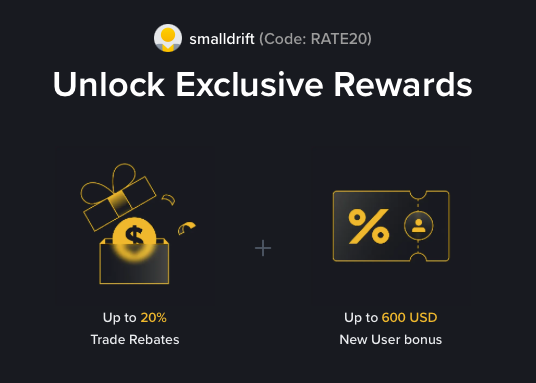
- Referral code: RATE20, pre-applied by this link
- Fee discount: 20%, shown on the Binance signup screen
- Additional rewards: Check Binance for current promotions and regional availability
Be wary of unofficial referral offers promising benefits they cannot show. The Binance signup screen lets you check the code and fee discount directly.
Compare Binance fees and available discounts →
SmallDrift may earn a commission when you sign up through this link. Trading involves risk, including loss of capital.
Related Articles


Explore Related Guides
Daily Crypto Market News
Follow Bitcoin price moves, major altcoins, and the events shaping the market.
Bitcoin ETF Flows Guide
Understand ETF inflows and outflows, and how to read them alongside price action.
Binance Fee Calculator
Learn how to estimate trading costs with referral and BNB discounts.
Verified Binance Referral Guide
See how RATE20 is applied and what to check on the Binance signup screen.