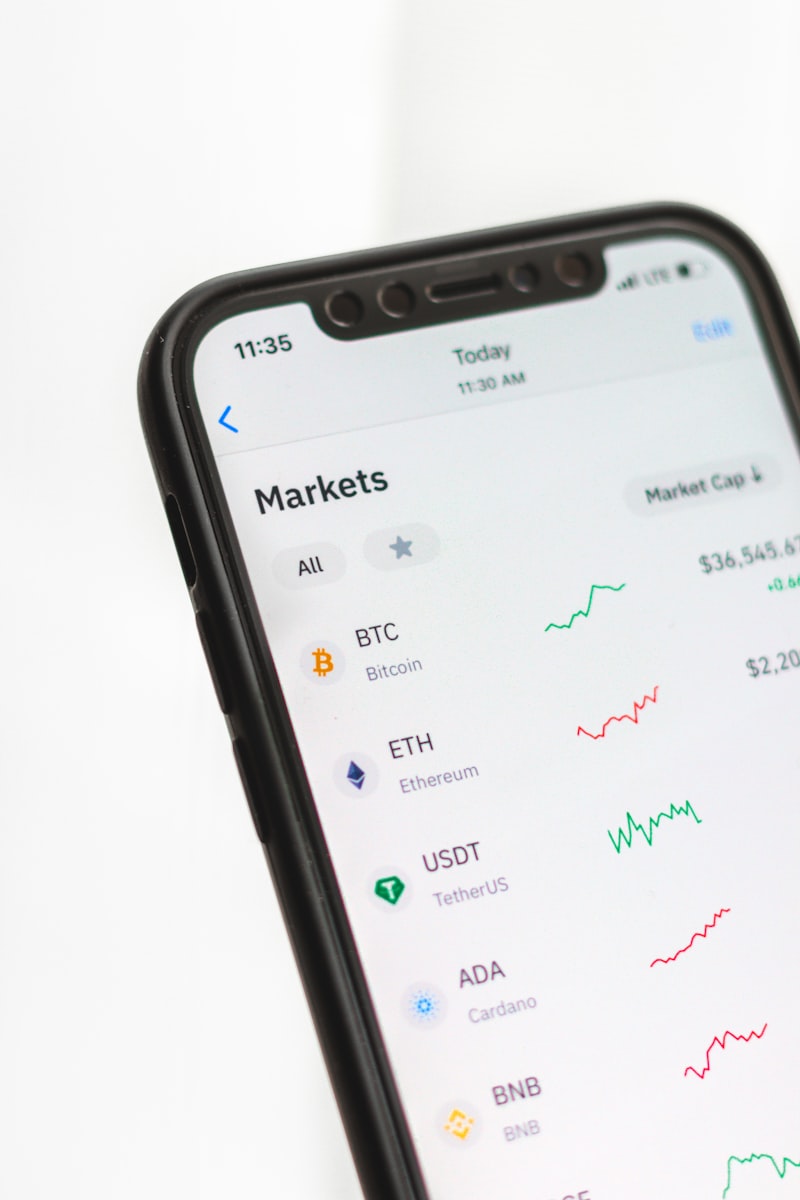
The best reason to try a trading bot is not that it promises a secret edge. It is that one useful decision—buy this amount each week, restore these portfolio weights, trade inside this range—can happen consistently without your mood taking over.
The dangerous moment comes later, when convenience tempts someone to give a third party more account access than the strategy requires. Automation can magnify a bad rule, keep buying after your circumstances change, and create a security problem if API keys are poorly configured. The first decision is not which bot has the prettiest backtest. It is which single behavior you want to automate—and whether it can stay small, understandable, and reversible.
For many beginners, a native recurring-buy rule is the most revealing first test. You feel the benefit immediately: fewer missed purchases and fewer last-minute attempts to time a perfect entry. Then you can decide whether more complex automation is worth the extra cost and access.
Which crypto bot is the least complex?
Recurring-buy and rebalancing rules are generally easier to reason about than leveraged or conditional strategies. Binance lists tools including Spot Grid, Futures Grid, Arbitrage, Rebalancing, Spot DCA, and Auto-Invest in its Trading Bots overview. Each has a different failure mode.
| Tool | The rule you are automating | What can still go wrong |
|---|---|---|
| Recurring buy / DCA | Buy a fixed amount on a schedule | You buy during a drawdown; the schedule no longer fits your cash flow. |
| Rebalancing | Restore target portfolio weights | Trading costs and tax consequences; selling a strong asset too early. |
| Spot Grid | Trade inside a selected range | A trend breaks the range and leaves you with an unwanted allocation. |
| Futures bot | Trade a rule with leverage | Losses and liquidation risk can accelerate quickly. |
The goal is not to automate every decision. It is to automate one decision that you would make consistently anyway, while retaining a clear stop condition.
The convenience-versus-cost debate is real
Actual users rarely debate whether automation is technically possible. They debate whether the convenience is worth the fee, spread, and loss of control. In one Reddit discussion about Binance Auto-Invest, one commenter summarized the attraction as fewer decisions and fewer mistakes, while another disliked not controlling the exact execution time. Other recurring-buy discussions repeatedly focus on spreads and all-in costs rather than the bot’s sticker price.
That disagreement suggests a better first experiment: automate a budget small enough that one month of execution gives you useful data. Record the actual filled price and fee for each purchase. At the end of the month, compare the convenience gained with the cost paid. You do not need to believe that DCA is superior in every market to learn whether the routine fits you.

API keys: use the minimum permission set
A bot key should have only the permissions it needs, and it should never have withdrawal permission for ordinary trading automation. Binance’s current Spot API security documentation says keys and secrets are sensitive, supports separating TRADE permission from account-data permissions, and instructs users to revoke keys immediately after unusual activity. Binance also recommends IP restrictions and minimal permission scope in its API security guidance.
Use this baseline before connecting any external bot:
- Turn on strong account security and use a unique password.
- Create a separate API key for each bot or service; label it clearly.
- Enable only the required read or spot-trading permissions.
- Leave withdrawals disabled.
- Apply an IP allowlist when the provider supplies stable, documented IP addresses.
- Set an account-level allocation cap; do not let a bot access your entire balance by default.
- Revoke the key immediately if the provider changes, the key is exposed, or activity looks unfamiliar.
Never paste a secret key into chat, a form, or a support message. No legitimate support flow needs it.
Backtests are descriptions, not warranties
A profitable backtest only shows how a rule behaved on selected historical data. It does not guarantee that the range, volatility, liquidity, fees, or execution conditions will repeat.
Be particularly cautious when a vendor presents a smooth equity curve without showing:
- fees, spread, and slippage assumptions;
- losing periods and maximum drawdown;
- the number of parameter changes after the fact;
- which exchange, pairs, and market conditions were tested; and
- whether the result is live, simulated, or selectively reported.
The less transparent those details are, the less useful the headline return is. A bot is not “set and forget” just because it sends orders while you sleep.
Operating case: when scheduled buying improves the entry
This eight-week example is a hand-worked scenario, not a backtest or a recommendation. It assumes a $100 purchase every week, no withdrawals, and ignores taxes. It uses a notional 0.10% cost per purchase only to show that costs still exist; verify your actual fee before running a plan.
Each scheduled buy is $100. The deliberately simple price path and units acquired before the assumed fee are:
| Week | Illustrative price | Units acquired |
|---|---|---|
| 1 | $100 | 1.0000 |
| 2 | $95 | 1.0526 |
| 3 | $90 | 1.1111 |
| 4 | $85 | 1.1765 |
| 5 | $80 | 1.2500 |
| 6 | $85 | 1.1765 |
| 7 | $90 | 1.1111 |
| 8 | $95 | 1.0526 |
Over the eight buys, $800 acquires about 8.93 units at a simplified average cost near $89.59 before the assumed costs. At a final price of $95, that model position is worth about $848 before costs; a single $800 buy at the week-one $100 price would be worth $760. But if the same acquired 8.93 units are marked at $70 instead, the model value is about $625. The schedule reduced timing concentration in this path; it did not create a floor under the asset.
The useful operating rule is to automate the budget, not a belief that every dip recovers. Binance describes Auto-Invest and Spot DCA as recurring-purchase tools and notes that bot settings still need periodic review as market conditions change in its Trading Bots guide.
Why the positive DCA path worked
The scheduled plan did not predict the bottom. It earned its advantage because purchases continued as price fell from $100 to $80, accumulating more units, and the asset later recovered to $95. The useful signals are therefore:
- the average cost is falling because lower-price purchases are actually executing;
- the schedule remains within the original cash budget;
- cumulative fees remain small relative to the position; and
- the asset thesis still supports continuing through the drawdown.
If price rises continuously from the first purchase, an earlier lump sum can outperform. If price falls and never recovers, DCA only accumulates a larger losing position. The opportunity exists in accumulation through volatility followed by recovery, not in the schedule by itself.
Operating case: a rebalancing gain from two-way movement
A Rebalancing Bot can create a different kind of positive result by repeatedly restoring target weights. Consider a deliberately clean two-asset model with no fees or tax:
- Start with $500 in Asset A and $500 in Asset B.
- Asset A rises 20% to $600 while Asset B falls 20% to $400. Total value remains $1,000.
- Rebalance to $500/$500, selling $100 of A and buying $100 of B.
- Both prices return to their starting levels. The rebalanced A position becomes about $416.67, while B becomes $625.
| End state | Portfolio value |
|---|---|
| Buy and hold after both prices return to the start | $1,000 |
| Rebalanced once at the midpoint | ~$1,041.67 |
| Illustrative rebalancing difference | ~$41.67 |
This is the intuition behind volatility harvesting, not a promise that frequent rebalancing creates free return. A 2025 quantitative study of the rebalancing premium found the realistic premium is typically modest and depends on return dynamics. A practical bot should therefore rebalance only when allocation drift is meaningful enough to justify the trading cost—not simply because a short timer expired.
A smaller launch checklist
The safest first launch is one strategy, one small allocation, one review date. Before enabling a bot, be able to answer each question below without looking at a sales page.
| Check | Your answer should be concrete |
|---|---|
| Objective | “Accumulate a fixed amount monthly,” not “make passive income.” |
| Allocation | A hard currency or percentage cap. |
| Stop condition | A change in budget, asset thesis, range, or security setup. |
| Costs | Current fees and how often the rule trades. |
| Access | Exact API permissions and whether IP restrictions are on. |
| Review | A calendar date plus conditions that require an earlier pause. |

Ready to automate one decision?
Choose the one action you repeat most often: a scheduled purchase, a target rebalance, or a range trade. If you can state its budget and pause rule in one sentence, you are ready for a small native-bot test. RATE20 is already applied to the official link below, so there is no separate referral-code field to complete on this page.
Open Binance with RATE20 and prepare your first bot test →
Only continue if Binance displays SmallDrift, RATE20, and the 20% fee discount. The offer and eligibility are determined by Binance and can vary. Do not trust a copied link or assume the code can be attached after signup.
Your path from here is simple:
- Create the account and complete its security setup.
- Fund only the four-week or single-bot budget you wrote down.
- Start with a native Binance tool so no third-party API key is required.
- Review the first execution, actual fee, and remaining allocation before letting the schedule continue.
A first launch with no third-party API key
The cleanest way to experience automation is to begin with a native Binance tool such as Auto-Invest, Spot DCA, or Spot Grid. That lets you learn schedules, fills, fees, and stop conditions before deciding whether an external service deserves API access.
- Choose one behavior: a fixed recurring purchase, a target rebalance, or a range trade. Do not combine them in the first test.
- Set a hard budget for four weeks or one grid allocation. Treat it as the maximum, not the first deposit.
- Write the pause rule before launch: a cash-flow change, thesis break, range exit, unexpected fee, or unfamiliar account activity.
- Record every fill, fee, and resulting asset allocation. Review after the first execution and again on a fixed date.
- If you later connect an external bot, create a dedicated API key, enable only the required permission, restrict IPs where supported, and leave withdrawals disabled.
The first successful bot is not the one with the highest dashboard return. It is the one you can stop in under a minute, explain without a vendor’s sales page, and size without changing your sleep.
Want to experience automation with one small rule? Start with the official RATE20 signup link →
FAQ
Are crypto trading bots safe?
No bot is inherently safe. A bot can automate an understandable rule, but it cannot remove market losses, technical outages, fee drag, or security risk. Futures and leverage add additional risk.
Should a trading bot API key have withdrawals enabled?
Not for normal trading automation. Use the least privileges possible and leave withdrawal permission disabled. Add IP restrictions where they are practical and documented.
Is DCA a guaranteed way to avoid losses?
No. DCA can make recurring purchases systematic, but it does not protect against an asset losing value or a schedule that no longer fits your budget.
Read the Binance referral code and signup checks before creating an account, and use the passive earning hub to compare the distinct risks of bots, Earn products, and staking.
This article is for informational purposes only and does not constitute financial advice. Always assess the current product rules, security settings, fees, and risks before connecting a bot or funding an exchange account.
Before you create an account
A final signup check, before any first trade
Binance must display SmallDrift, RATE20, and the 20% fee discount in its signup flow. If it does not, do not assume the offer will be applied after account creation.
Continue reading