Bitcoin at $64.4K: The 57% Dominance Trap on August 5, 2026
Bitcoin trades near $64.4K on August 5, 2026 as ETF buying returns, BTC dominance reaches 57%, Fear stays at 27, and RATE20 offers 20% off.
What is the key decision in this column?
Bitcoin trades near $64.4K on August 5, 2026 as ETF buying returns, BTC dominance reaches 57%, Fear stays at 27, and RATE20 offers 20% off.
Read
Follow the pressure points before reacting to the headline.
Validate
Cross-check the thesis with the market and ETF flow hubs.
Return
Save the setup and reopen it after the next market catalyst.

Bitcoin is back near $64,400 on August 5, 2026, and the first instinct is to call it a recovery. The more revealing number is 57%: Bitcoin dominance has climbed to that level while the market remains in Fear. Capital is returning, but it is returning selectively. That is a recovery with a narrow door.
Current market data shows Bitcoin up roughly 1.2% over 24 hours, with daily trading volume near $23.2 billion and market capitalization around $1.29 trillion. A live market feed also shows the latest Bitcoin spot ETF headline at approximately $170 million of net inflows. The price is firming, yet Ethereum and Solana are not leading the move. August is rewarding the anchor asset first and asking altcoin traders to wait outside.
Quick Answer: Is Bitcoin bullish on August 5, 2026?
Bitcoin is cautiously bullish above $63,000, but the move becomes a confirmed breakout only above $65,500 and then $67,000. ETF demand has improved, while Fear remains elevated and dominance is rising. That combination supports a Bitcoin-led rebound, not a broad risk-on altcoin cycle.
| Market signal | Current reading | Interpretation |
|---|---|---|
| Bitcoin price | $64,400 | Near the upper half of the recent range |
| Bitcoin 24h change | About +1.2% | Short-term buyers have control |
| Bitcoin market cap | About $1.29T | Large enough to absorb meaningful flows |
| 24h crypto market volume | About $23.2B for BTC | Participation is present but not euphoric |
| Bitcoin dominance | 57.0% | Capital is concentrating in the leader |
| Fear & Greed | 27, Fear | Traders remain defensive |
The live Bitcoin figures and dominance come from CoinGecko’s Bitcoin market page. Alternative.me’s crypto dashboard shows the same broad picture: Bitcoin near $64,379, Ethereum near $1,874, Solana near $74, and a Fear reading of 27.
The ETF bid is back, but it is not broad conviction yet
The most constructive development is the return of spot ETF buying. CoinGecko’s current market news feed lists roughly $170 million of net Bitcoin ETF inflows, with BlackRock’s IBIT leading the session. That matters because the July rebound struggled whenever institutional demand disappeared. A real spot bid gives the move a better foundation than perpetual-futures leverage alone.
But one positive session does not erase the previous warning. July ended with a monthly net inflow of $172.4 million, even though the final trading day saw $265.4 million leave US spot Bitcoin ETFs. The month produced 13 inflow days and 9 outflow days. The totals were positive, but the path was unstable.
| ETF flow checkpoint | Net flow |
|---|---|
| July monthly total | +$172.4M |
| July inflow days | 13 |
| July outflow days | 9 |
| July 30 | +$233.1M |
| July 31 | -$265.4M |
| Latest market-feed inflow | About +$170M |
The historical figures are from TFTC’s July ETF flow table. The correct read is not “institutions are back” or “institutions are gone.” It is that institutions are willing to buy when price is attractive, but they have not yet shown the persistent demand needed to carry Bitcoin through the next resistance band.
That distinction is the entire August trade. If daily inflows remain above $100 million while BTC holds above $63,000, the rebound gains credibility. If inflows vanish as price approaches $65,500, the market is still trading inside a liquidity range. The ETF chart is a confirmation tool, not a magic green light.

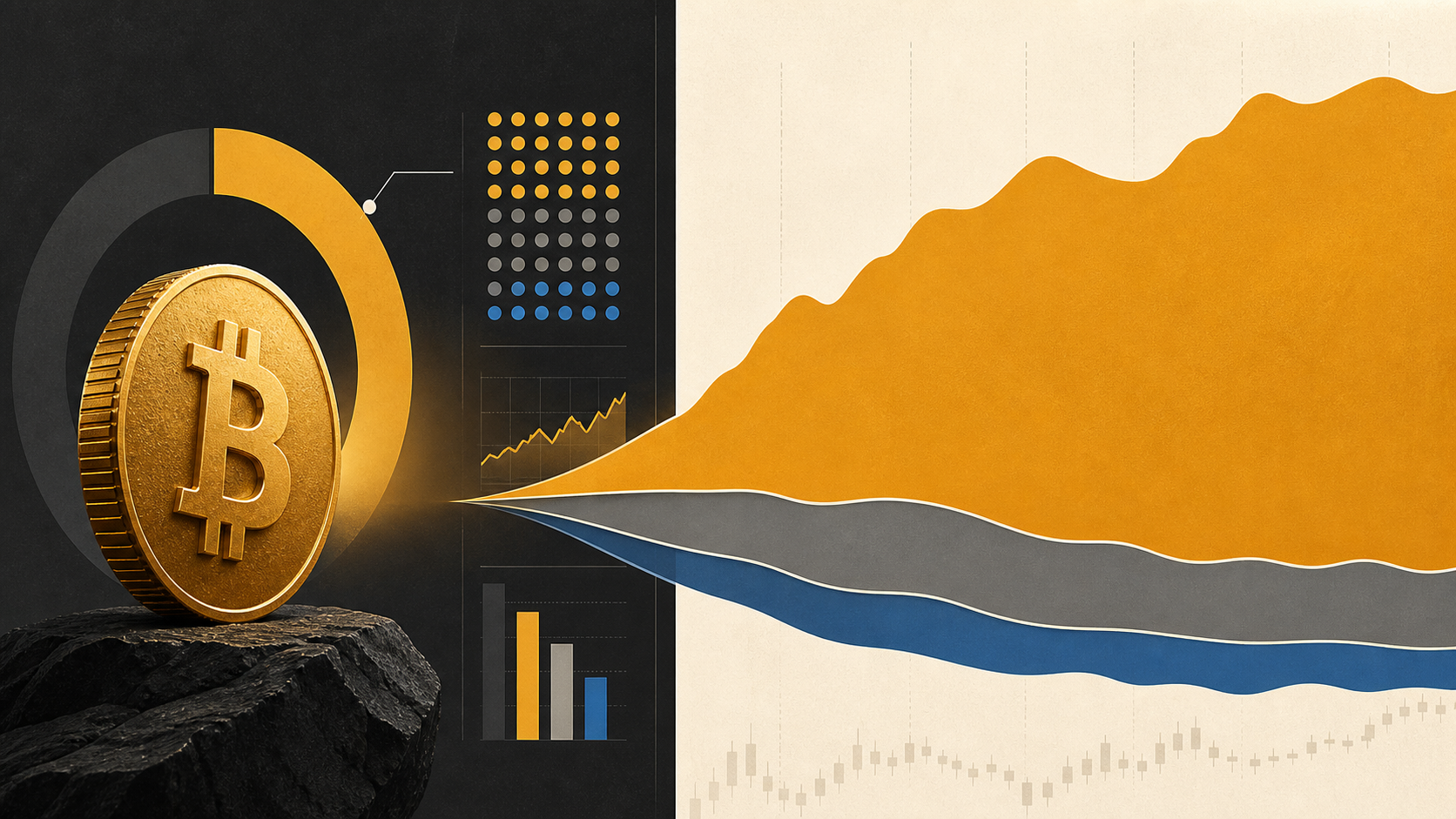
What does 57% Bitcoin dominance mean?
A 57% Bitcoin dominance reading means crypto capital is preferring liquidity and market depth over speculation. Traders are participating, but they are not yet distributing risk evenly across the market.
Bitcoin dominance has risen even as several large-cap assets post modest gains. Ethereum is near $1,874, Solana near $74, and BNB near $603. The dashboard’s stronger movers include Zcash, Polkadot, and BNB, but the broader pattern is not a synchronized altcoin expansion. Bitcoin remains the portfolio’s first stop.
| Asset | Approximate price | 24h change | Market role |
|---|---|---|---|
| Bitcoin | $64,400 | +1.2% | Liquidity anchor |
| Ethereum | $1,874 | +1.1% | Large-cap beta, still lagging |
| Solana | $74.27 | +1.3% | Higher-beta secondary trade |
| BNB | $603.22 | +2.4% | Exchange and ecosystem exposure |
| Polkadot | $0.857 | +4.3% | Stronger short-term mover |
The trap is assuming that a rising dominance chart is automatically bullish for Bitcoin. It can also signal that traders are hiding in the safest crypto asset while reducing exposure elsewhere. Dominance becomes more constructive when it rises with total market capitalization and then begins to roll over as altcoin breadth expands. Today, the first half of that sequence is visible. The second half is not.
The range that decides August
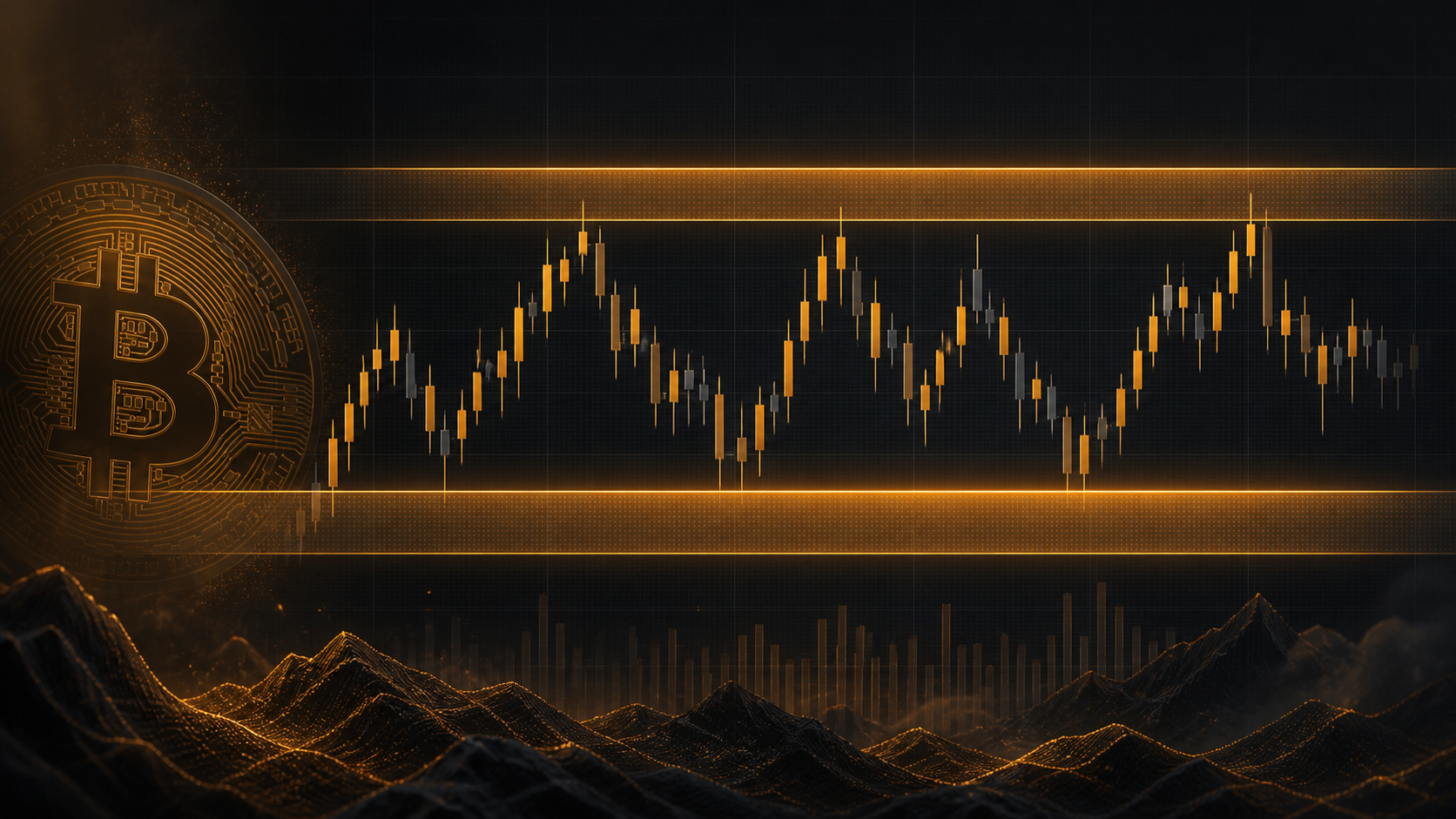
Bitcoin’s 7-day range on CoinGecko is approximately $62,241 to $65,305. That gives traders a useful working map. The lower boundary is where buyers need to appear. The upper boundary is where the rebound must prove it can become more than a range rotation.
| Level | Function | What would confirm it |
|---|---|---|
| $62,000 to $62,500 | Demand pocket | Pullbacks hold without heavy ETF selling |
| $63,000 | Rebound line | Daily closes stay above the pivot |
| $64,400 | Current price zone | Buyers accept higher prices |
| $65,300 to $65,500 | First resistance | Spot volume expands through the 7-day high |
| $67,000 to $68,000 | Major ceiling | Breakout survives a retest |
| $70,000 to $72,000 | Bull extension | Momentum broadens beyond Bitcoin |
Recent market analysis also placed resistance around $67,000 to $68,000 and strong support near $60,000. Forbes’ July technical review cited $70,000 to $72,000 as an upside target and $60,000 as the meaningful support zone.
What invalidates the bullish setup?
A daily close below $62,000 would weaken the immediate recovery, while a decisive break below $60,000 would invalidate the broader August rebound thesis. The distinction matters. A wick below support can be a liquidity sweep. A close below support says buyers did not reclaim the level.
On the upside, Bitcoin does not need to sprint straight to $70,000. The healthier path would be a close above $65,500, a controlled retest, and then an attempt at $67,000. If price jumps through resistance while ETF flows flatten, the move may be more fragile than it looks. Markets are fond of making the first breakout look definitive before asking for receipts.
Why Fear at 27 matters, and why it is not a signal to buy
Is Fear & Greed at 27 bullish for Bitcoin?
Fear at 27 can create a favorable contrarian backdrop, but it is not a standalone buy signal. Fear tells you positioning is defensive. It does not tell you whether forced selling is finished.
Alternative.me shows the index at 27 today, up from Extreme Fear at 25 yesterday, with last week’s reading at 29 and last month’s at 24. Sentiment has improved slightly without reaching optimism. That is useful because a market can climb a wall of skepticism, but it also means the next move will need evidence.
The evidence to watch is straightforward:
- BTC holds $63,000 on a daily closing basis.
- ETF inflows continue for more than one session.
- Bitcoin volume rises on advances rather than only during selloffs.
- Ethereum begins to outperform BTC, showing that risk appetite is widening.
- Dominance stops rising because capital is moving into quality altcoins, not because Bitcoin is falling.
Until then, Fear is a description of the market, not a trading instruction.
Binance watch: products are active, but product news is not a market thesis
Binance’s latest announcements include a $200,000 GRVT trading competition, the launch of Binance Lite Loan, and notices about spot-pair removals and changes to USDⓈ-M perpetual-contract margin tiers. These are relevant to execution and risk management, especially for users trading new contracts or borrowing against collateral.
The official Binance announcements page is the right place to check the current terms, launch times, and affected regions. A new competition can increase attention. A margin-tier change can alter liquidation risk. Neither one proves that Bitcoin will break resistance.
Trade the range without donating to fees
Range markets tempt traders into repeated small decisions. That is exactly when costs become visible. If you enter, reduce, re-enter, and hedge several times while BTC moves between $62,000 and $65,500, the market can be flat while your fee bill trends higher.
Sign up on Binance with 20% fee discount
Use referral code RATE20 for a permanent 20% discount on eligible Binance trading fees. The complete signup route is covered in Get 20% off with code RATE20. Check current eligibility and regional terms before registering.
Stack discounts before you stack positions
If this market remains range-bound, reduce execution drag before increasing trade frequency.
- 20% off: Use referral code RATE20 at signup.
- 25% off: Pay eligible fees with BNB.
- Maker discount: Prefer limit orders when the setup allows patient execution.
Under the stated assumptions, the effective cost can be as low as about 0.06% per trade. Actual fees depend on account tier, product, region, and current Binance terms.
| 30-day volume | Standard 0.10% fee | With 20% referral | Illustrative saving |
|---|---|---|---|
| $5,000 | $5.00 | $4.00 | $1.00 |
| $10,000 | $10.00 | $8.00 | $2.00 |
| $50,000 | $50.00 | $40.00 | $10.00 |
| $100,000 | $100.00 | $80.00 | $20.00 |
Start trading on Binance with maximum discount
Lower fees are not a reason to trade more. They are a reason to keep a valid setup from being quietly destroyed by friction.
The first August checklist
The next sessions should be handled as a sequence of tests:
- ETF test: Does the latest inflow become a multi-session trend?
- $63,000 test: Does Bitcoin defend the rebound pivot on weakness?
- $65,500 test: Can price clear the 7-day high with spot volume?
- $67,000 test: Does the major resistance zone convert into support?
- Dominance test: Does 57% remain elevated because BTC is strong, or because altcoins are weak?
- Breadth test: Does Ethereum start outperforming, or does Bitcoin keep absorbing the risk budget?
- Binance risk test: Do margin-tier or contract changes affect the leverage you planned to use?
Bottom line
Bitcoin at $64.4K is a credible recovery attempt, but it is still a Bitcoin-led trade rather than a full crypto risk-on event. The positive case has three pillars: the latest ETF data points to about $170 million of buying, BTC is holding above $63,000, and Fear remains high enough to leave room for a sentiment rebound.
The caution case is equally clear. July ETF flows were positive only by a narrow margin, dominance has climbed to 57%, and Bitcoin has not yet cleared the $65,500 to $68,000 resistance ladder. Until those levels break and hold, the disciplined approach is to trade the range, not invent a trend.
What is the best Binance referral code?
The best Binance referral code for this site is RATE20, which offers a 20% fee discount under the stated referral terms. Confirm current eligibility and regional availability during signup.
How much can I save with Binance referral code RATE20?
At a $10,000 monthly trading volume, the illustrative saving is about $2 before additional BNB or maker-order discounts. Actual savings depend on the account’s fee tier, product, jurisdiction, and current Binance schedule.
Is Bitcoin bullish or bearish on August 5, 2026?
Bitcoin is cautiously bullish above $63,000, but the trend is not confirmed until BTC clears $65,500 and then $67,000 with sustained spot demand. A daily close below $62,000 weakens the setup, while a break below $60,000 changes the risk profile.
Create your Binance account with 20% fee discount
Referral code: RATE20, permanent 20% off eligible trading fees under the stated terms.
This article is for informational purposes only and does not constitute financial advice. Always do your own research before making investment decisions.
Pause once before you turn this column into a trade
Good conversion on a finance column comes from verification, not urgency. This checkpoint keeps the thesis, the revisit plan, and the execution path in one frame.
Identify the one condition that would make this read weaker tomorrow.
Give the next visit a job before this session ends.
A saved thesis becomes more valuable when the reason to reopen it is specific and close to the live desk.
- Reopen the strongest section from this article.
- Cross-check it with the live desk.
- Only then revisit fees or signup.
Keep the lower-cost path close only if the thesis still survives.
The right execution cue here is not hype. It is a verified fee and signup path that appears after the read has already earned a second look.
- Confirm the thesis still holds after this review.
- Check whether fees change the trade quality.
- Only then keep the signup path in reach.
Read the thesis, keep the return path, and preserve the execution edge
A strong crypto finance column should make the next read, the validation route, and the fee-aware action path obvious before the first scroll gets noisy.
What this column should help you decide
Use the opening map to decide whether you should keep reading, validate through the desk, or move into the fee stack before acting.
Keep the strongest thread one click away
This read should leave behind one clear thing to reopen so the next visit starts with context instead of random scrolling.
Save this column or open another desk route to start building a reusable queue here.
Keep the fee math attached before this thesis turns into a trade
A better referral surface is one that appears next to clear cost discipline and a surviving thesis, not as a detached signup prompt.
- Read the highest-pressure section first.
- Validate through desk context or ETF flow.
- Only then open the fee stack and signup path.
Keep The Referral Edge Attached To This Thesis
Keep the discount, the fee math, and the next return trigger in one compact execution layer.
Copy it now, then keep the signup path for the moment the fee math still works.
Estimate how much fee drag the referral can remove before you build a habit around higher costs.
Assumes a base 0.10% spot fee and a 20% referral discount.
Rough estimate versus paying the standard 0.10% spot fee.
Keep the code copied only if the market read and the fee math still both look worth acting on.
Decide When This Column Should Pull You Back
The strongest finance columns earn the next visit by assigning a clean reason to come back before the reader leaves.
Pick one window so the next visit has a job before this session ends.
Verify Before You Sign Up — Don't Get Scammed
Many sites advertise fake referral discounts that don't actually apply. Before signing up through any referral link, always verify the referral code and discount rate shown on the Binance registration page. Here's proof of our verified referral:
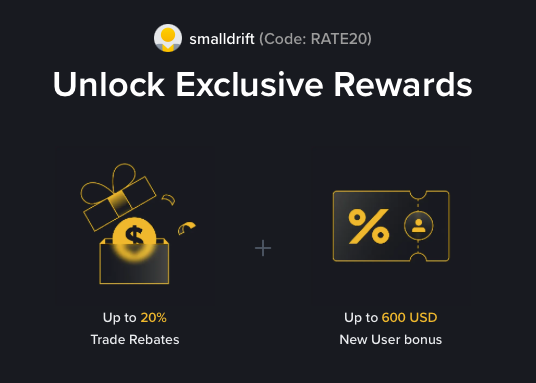
- Referral Code: RATE20
- Trade Rebate: Up to 20% on every trade (lifetime)
- New User Bonus: Up to 600 USD
If the registration page does not show these benefits, do not proceed. Only sign up when you can confirm the referral code and discount are applied.
Related Articles


Where To Go After This Column
A strong column should close with one next read, one return queue, and one execution path that is easy to reopen.
Where this read should take you next
Open one broader desk page and one execution page before the thesis leaves working memory.