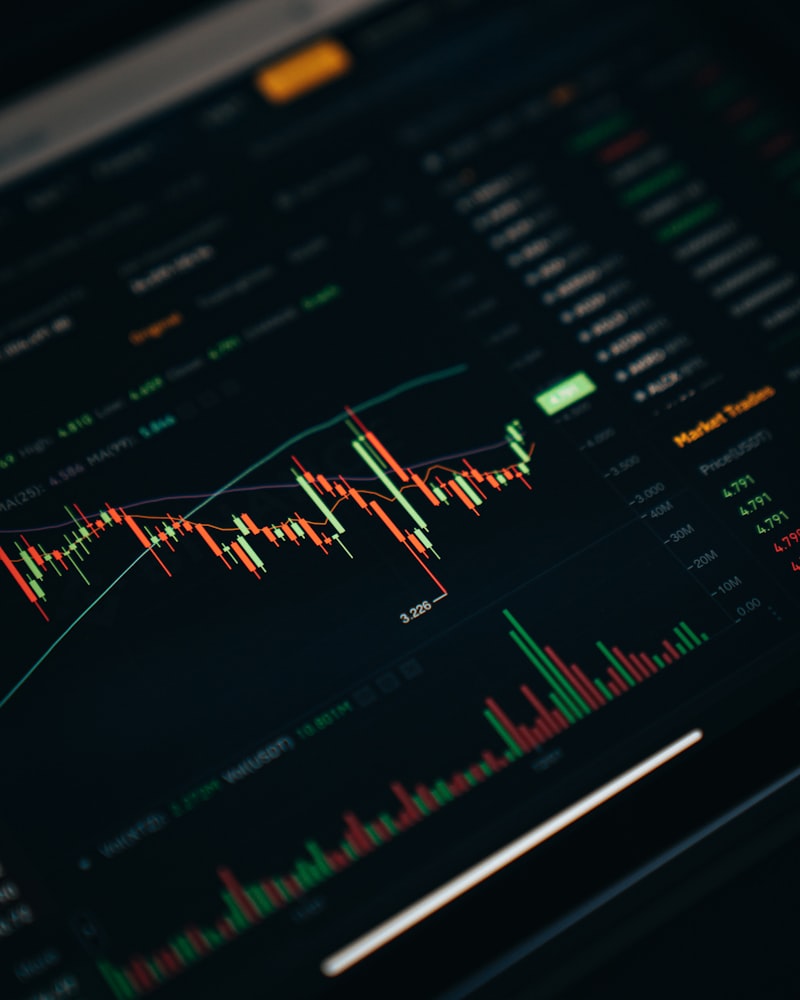
What Futures Trading Actually Costs on Binance
Futures trading fees on Binance are lower than spot fees — but the total cost of a futures trade is more complex than most traders realize. Beyond the basic maker/taker fee, you’re dealing with funding rates, liquidation fees, and the multiplier effect of leverage on your fee bill.
This guide breaks down every cost with real calculations so you know exactly what you’re paying.
Base Fee Structure
Binance has two types of futures contracts, each with different fee schedules:
USDT-Margined Futures
These are the most popular. You use USDT as collateral.
| VIP Level | Maker Fee | Taker Fee |
|---|---|---|
| Regular | 0.0200% | 0.0500% |
| VIP 1 (≥$1M/30d) | 0.0160% | 0.0400% |
| VIP 2 (≥$5M/30d) | 0.0140% | 0.0350% |
| VIP 3 (≥$20M/30d) | 0.0120% | 0.0320% |
COIN-Margined Futures
You use the crypto itself (BTC, ETH, etc.) as collateral.
| VIP Level | Maker Fee | Taker Fee |
|---|---|---|
| Regular | 0.0100% | 0.0500% |
| VIP 1 | 0.0080% | 0.0450% |
| VIP 2 | 0.0060% | 0.0400% |
Key insight: COIN-margined maker fees are half of USDT-margined. If you hold BTC long-term anyway, COIN-margined contracts can save you significantly on maker fees.
How Leverage Multiplies Your Fees
This is where many traders get caught off guard. Fees are calculated on your total position size, not your margin.
If you deposit $1,000 and use 10x leverage, your position is $10,000. Your fee is calculated on $10,000.
Example: Opening a BTC long position
- Your margin: $1,000
- Leverage: 20x
- Position size: $20,000
- Entry fee (market order): $20,000 × 0.0500% = $10.00
- Exit fee (market order): $20,000 × 0.0500% = $10.00
- Total round-trip fee: $20.00 (2% of your $1,000 margin)
Now with referral discount + limit orders:
- Entry fee (limit order, referral): $20,000 × 0.0160% = $3.20
- Exit fee (limit order, referral): $20,000 × 0.0160% = $3.20
- Total round-trip fee: $6.40 (0.64% of your margin)
The difference is $13.60 per trade. If you make 5 trades per day, that’s $68/day or $24,820/year in savings.
Funding Rates: The Hidden Cost
Funding rates are periodic payments exchanged between long and short traders every 8 hours. They’re not a Binance fee — they’re a mechanism to keep futures prices aligned with spot prices.
How funding works:
- Positive rate (typical in bull markets): Longs pay shorts
- Negative rate (typical in bear markets): Shorts pay longs
- Rate range: Usually -0.03% to +0.05% per 8-hour period
- Payment times: 00:00, 08:00, 16:00 UTC
Real cost impact:
Holding a $50,000 long position with a typical 0.01% funding rate:
- Per 8 hours: $50,000 × 0.01% = $5.00
- Per day (3 payments): $15.00
- Per month: $450.00
During extreme market conditions, funding can spike to 0.1% or higher:
- Per 8 hours at 0.1%: $50,000 × 0.1% = $50.00
- Per day: $150.00
How to minimize funding costs:
- Check funding rates before opening positions — avoid entering when rates are extreme
- Time your entries — if funding is due in 30 minutes, wait until after the payment
- Use funding rates as a signal — extreme rates often precede reversals
- Consider hedging — if you’re long spot, short futures during high positive funding to earn the rate
Liquidation Fee
If your position gets liquidated, Binance charges an additional fee. This is separate from your trading loss.
- Liquidation fee: 0.5% of your position’s notional value (for USDT-margined)
- Insurance fund: Part of the liquidation fee goes to Binance’s insurance fund
Example:
- Position size: $10,000
- Liquidation fee: $10,000 × 0.5% = $50
- This is on top of the losses that triggered liquidation
This is why risk management matters more than fee optimization. A single liquidation can cost more than months of fee savings.
Fee Calculation for Common Scenarios
Scenario 1: BTC Scalper (20 trades/day, $5,000 margin, 10x leverage)
| Item | Without Discounts | With Referral + Limit |
|---|---|---|
| Position size | $50,000 | $50,000 |
| Fee per trade | $25.00 (taker) | $8.00 (maker + referral) |
| Daily fee (20 trades) | $500.00 | $160.00 |
| Monthly fee | $10,000 | $3,200 |
| Annual fee | $120,000 | $38,400 |
| Annual savings | $81,600 |
Scenario 2: Swing Trader (2 trades/week, $10,000 margin, 5x leverage)
| Item | Without Discounts | With Referral + Limit |
|---|---|---|
| Position size | $50,000 | $50,000 |
| Fee per trade | $25.00 (taker) | $8.00 (maker + referral) |
| Weekly fee (2 trades) | $50.00 | $16.00 |
| Monthly fee | $200 | $64 |
| Annual fee | $2,400 | $768 |
| Annual savings | $1,632 |
Scenario 3: Position Trader (4 trades/month, $20,000 margin, 3x leverage)
| Item | Without Discounts | With Referral + Limit |
|---|---|---|
| Position size | $60,000 | $60,000 |
| Fee per trade | $30.00 (taker) | $9.60 (maker + referral) |
| Monthly fee | $120 | $38.40 |
| Annual fee | $1,440 | $460.80 |
| Annual savings | $979.20 |
The True Cost of a Futures Trade
When evaluating a trade, factor in ALL costs:
- Entry fee: Maker (0.02%) or Taker (0.05%)
- Exit fee: Same rates
- Funding rate: Check current rate × expected hold time
- Slippage: For large orders, the actual fill price may differ from the displayed price
- Potential liquidation fee: 0.5% if stop-loss fails or isn’t set
Formula for total trade cost:
Total Cost = (Entry Fee + Exit Fee) + (Funding Rate × Hold Periods) + SlippageFor a $50,000 position held for 2 days with referral + limit orders:
- Entry: $50,000 × 0.016% = $8.00
- Exit: $50,000 × 0.016% = $8.00
- Funding (6 periods × 0.01%): $50,000 × 0.06% = $30.00
- Total: $46.00 (0.092% of position)
Without discounts using market orders:
- Entry: $50,000 × 0.05% = $25.00
- Exit: $50,000 × 0.05% = $25.00
- Funding: $30.00
- Total: $80.00 (0.16% of position)
How to Get the Lowest Possible Futures Fees
The optimal setup:
- Sign up with referral code RATE20 — 20% off all futures fees
- Enable BNB fee payment — additional 10% off futures fees
- Use limit orders exclusively — maker fees are 60% cheaper than taker
- Trade enough volume — reach VIP 1 at $1M/30d (leverage volume counts)
- Monitor funding rates — close positions before high funding payments
- Consider COIN-margined — maker fees are half of USDT-margined
The resulting fee stack:
Starting from 0.0500% taker → 0.0160% maker with referral → ~0.0144% with BNB → even lower at VIP 1+
That’s a reduction from 0.0500% to as low as 0.0100% — an 80% decrease in trading fees.
Bottom Line
Futures fees on Binance are low, but they add up fast because of leverage. A $1,000 trade at 20x means you’re paying fees on $20,000. The difference between the worst setup (market orders, no referral) and the best setup (limit orders, referral + BNB) is massive — especially for active traders.
Sign up with referral code RATE20, enable BNB payment, and use limit orders. It takes 5 minutes and saves thousands per year.
Referral safety check
Know what a referral link actually provides
Be cautious with referral codes or links that do not clearly identify their provider and benefit. SmallDrift’s official RATE20 link provides a 20% trading-fee discount, and Binance’s signup page transparently displays SmallDrift, RATE20, the discount, and the referral benefit before account creation.
Continue reading